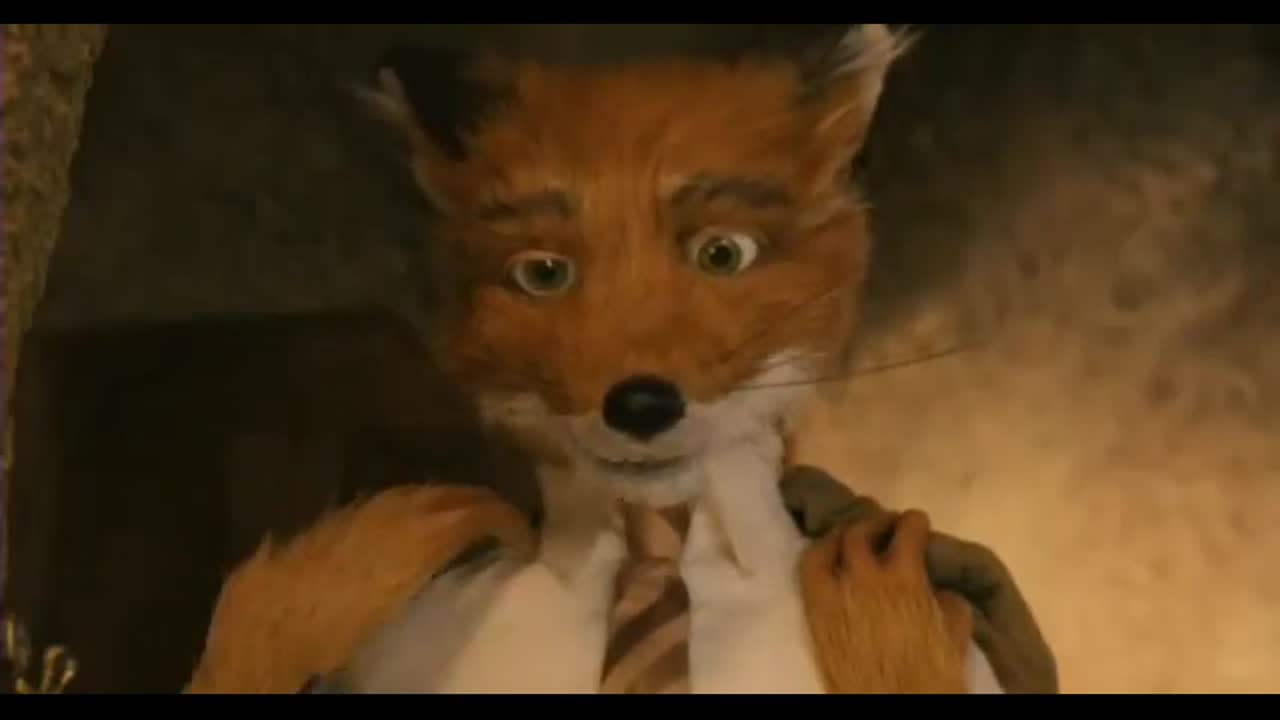
Roald Dahl was a bit of a meanie. If you grew up reading his books, you know exactly what I’m talking about. His stories have this jagged, slightly cruel edge where the villains don’t just lose—they get humiliated in ways that feel almost visceral. Fantastic Mr. Fox, published in 1970, is a lean, mean, 80-page machine. It’s a heist story. It’s a survival story. But when Wes Anderson got his hands on it in 2009, he turned it into a therapy session about mid-life crises and existential dread.
It's wild. The ways Fantastic Mr Fox different versions exist in our collective memory depend entirely on whether you’re a fan of the ink drawings or the stop-motion corduroy.
I’ve spent way too much time obsessing over the nuances between the original 1970 text and the 2009 film. Most people think a movie adaptation is just "the book but longer." That is absolutely not the case here. Anderson took the skeleton of Dahl’s plot and draped a completely different nervous system over it.
The Personality Shift: A Master Thief vs. A Man in a Suit
In the book, Mr. Fox is basically a folk hero. He’s clever because he has to be. He’s providing for his family, and he outsmarts Boggis, Bunce, and Bean because they are bloated, disgusting caricatures of greed. He doesn't really have "character flaws" in the modern screenwriting sense. He’s just a fox doing fox stuff, and he happens to be the best at it.
The movie? Totally different vibe.
George Clooney’s Mr. Fox is a journalist. He’s insecure. He’s worried about his "natural instincts" vs. his suburban life. He’s kind of a jerk to his son, Ash. Honestly, the movie version of the character is deeply flawed in a way Dahl never intended. Dahl’s Fox is a winner from page one. Anderson’s Fox is a guy who’s scared he’s past his prime and starts a war with three farmers just to prove he’s still got "it."
What about the family?
Dahl wrote "The Small Foxes." They don't even have names. They are a unit—a chorus of hungry mouths that cheer for their dad. Anderson realized you can't have a 90-minute movie with nameless children, so we got the intense, moody Ash and the "perfect" cousin Kristofferson. This creates a sibling rivalry that simply does not exist in the source material. It changes the movie from a story about a family vs. the world to a story about a family trying to survive each other while the world tries to kill them.
Why the Ending of Fantastic Mr Fox Different Versions Matters
The ending is where the divergence becomes a literal chasm.
In the book, the animals find a permanent solution. They dig a massive underground tunnel system that connects to all the farmers' storehouses. They decide they will never have to go above ground again. It’s a victory, but it’s also a retreat. They choose safety and a lifetime of stolen food over the risk of the surface. It’s a happy ending, but it’s also a bit claustrophobic if you think about it too long.
Wes Anderson goes the opposite direction.
The movie ends in a supermarket. Specifically, a Boggis, Bunce, and Bean International Supermarket. The animals are still "trapped" in a way, living in the sewers, but they’ve found a way to exploit the very system that tried to exterminate them. And there’s that famous "Wolf" scene. Mr. Fox sees a wild wolf in the distance, raises a fist in a gesture of solidarity, and realizes that while he is a "wild animal," he is also something else now. He’s a father. He’s a neighbor. He’s a guy who drinks apple juice in a carton.
The book is about winning a war. The movie is about accepting who you are.
The Villains: Gross vs. Menacing
Let’s talk about Boggis, Bunce, and Bean.
Dahl’s descriptions are legendary. Boggis is a chicken farmer who eats three boiled chickens smothered with dumplings every day. Bunce is a duck-and-goose farmer who eats donuts stuffed with goose-liver paste. Bean is a turkey-and-apple farmer who doesn't eat; he just drinks gallons of strong cider. They are disgusting. They are "filthy" and "mean."
In the movie, they are certainly the antagonists, but they feel more like a corporate entity. Bean, voiced by Michael Gambon, is actually kind of terrifying. He’s lean, he’s smart, and he’s sophisticated. He’s not just a gross farmer; he’s a strategist.
This change was necessary for the film because you need a foil for the Fox’s intellect. If the farmers are just bumbling idiots, there’s no tension. By making Bean a serious threat, the movie raises the stakes.
The Rat: From Background Character to Tragic Villain
If you haven't read the book lately, you might not even remember Rat. In Dahl’s version, he’s just a drunk, rude animal the foxes encounter in the cider cellar. He’s an obstacle, sure, but he’s mostly just a jerk.
Willem Dafoe’s Rat in the movie is a masterpiece of character design. He’s a switchblade-wielding, finger-snapping security guard for Bean. He has a history with Felicity (Mrs. Fox). He’s a tragic figure who stayed "wild" in a way Mr. Fox couldn't. His death scene—which is surprisingly heavy for a "kids' movie"—adds a layer of grit that the book never touches.
Technical Differences That Change the Feel
The medium dictates the message.
- Color Palette: The book is often associated with the Quentin Blake illustrations (though the original had different art). Blake’s style is frantic, messy, and energetic. The movie is obsessively curated with oranges, yellows, and browns.
- Dialogue: Dahl’s dialogue is punchy and classic. Anderson’s dialogue is deadpan, rapid-fire, and full of modern neuroses.
- The "Cuss" Gag: One of the most brilliant ways the Fantastic Mr Fox different styles manifest is the use of the word "Cuss." Since they couldn't have the animals swearing in a PG movie, Anderson just had them use the word "Cuss" as a replacement. "Are you cussing with me?" It’s a meta-joke that wouldn't work on the page but defines the film’s tone.
Actionable Insights for Fans and Educators
If you're looking to dive deeper into these differences, don't just take my word for it. There are a few specific things you can do to really see the contrast.
First, track the timeline. The book happens over a very short period—a few days of digging and a final banquet. The movie spans much longer, allowing for the slow breakdown of Mr. Fox’s domestic life.
Second, look at the role of Mrs. Fox. In the book, she’s the "brave" wife who stays back and gets weak from hunger. In the movie (Felicity), she’s a painter of landscapes—specifically "stormy" ones. She is the moral center of the film. She’s the one who tells him, "I love you, but I shouldn't have married you." That’s a heavy line! It changes the entire power dynamic of their relationship.
Finally, notice the absence of the "human" world. In the book, the farmers are just people. In the movie, the humans feel like a force of nature or a rival civilization. The scale is different.
To truly appreciate why Fantastic Mr Fox different versions work, you have to stop comparing them as "original vs. copy" and start seeing them as "theme vs. variation." Dahl wrote about the triumph of the underdog. Anderson wrote about the complexity of the "wild" spirit in a civilized world. Both are brilliant, but they aren't the same story.
Read the book to your kids for the thrill of the heist. Watch the movie with your friends to discuss the burden of being "fantastic." You’ll find that they complement each other by filling in the gaps the other left behind. If you're a teacher, use the two versions to show how a "hero" can be interpreted as either a selfless provider or a selfish egoist depending on the lens. The contrast is where the real magic happens.