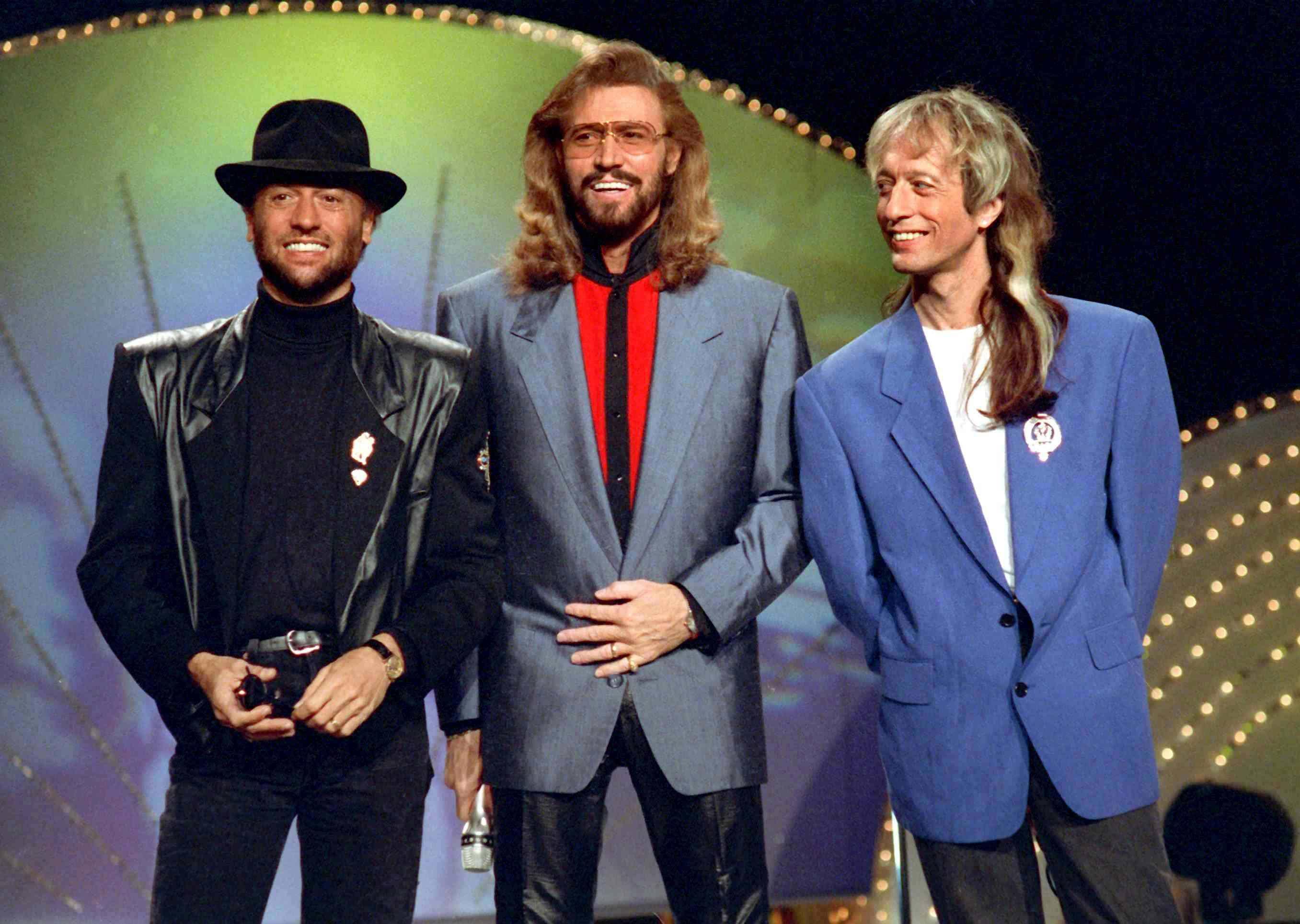
It’s a weird feeling when you realize that the voices behind "Stayin' Alive" have mostly gone silent. Honestly, the Bee Gees weren't just a band; they were a brotherhood that defined decades of pop culture, from the Beatles-esque harmonies of the 60s to the white-suited disco fever of the late 70s. But time is a thief. If you’re looking for a quick head count, the reality is heavy.
As of January 2026, there is only one original member of the Bee Gees still alive: Sir Barry Gibb.
He’s the eldest. The one with the iconic mane of hair and that gravity-defying falsetto. It’s kinda surreal to think that out of the three brothers who stood shoulder-to-shoulder on the Saturday Night Fever soundtrack, Barry is the last man standing. He’s 79 now, and while he’s still out there keeping the legacy afloat, the story of how he became the "sole survivor" is one of the most heartbreaking arcs in music history.
The Last Brother Standing: Barry Gibb in 2026
Barry Gibb isn't just "still alive"—he’s surprisingly active. Just a few weeks ago, rumors started swirling about potential 2026 tour dates. While his team hasn't dropped a full global itinerary yet, the buzz alone shows how much people still crave that Gibb magic.
Barry has spent the last decade and a half grappling with a pretty intense level of survivor's guilt. He’s been very open about it. In interviews, he’s mentioned that he’d give up all the fame and the platinum records just to have his brothers back for five minutes. It’s not just PR talk; you can hear the weight of it when he performs.
In 2021, he released Greenfields: The Gibb Brothers' Songbook, Vol. 1, where he reimagined Bee Gees hits as country duets with folks like Dolly Parton and Keith Urban. It was a smart move. It allowed him to keep the music alive without trying to recreate the three-part harmonies that are physically impossible to do alone.
What Happened to the Other Bee Gees?
To understand why people are always asking how many the bee gees are still alive, you have to look at the string of tragedies that hit the family. It wasn't just a slow fade into retirement. It was a series of sudden, gut-punch losses.
Maurice Gibb (The "Man in the Middle")
Maurice was the first of the trio to go, and it caught everyone off guard. He was the glue of the group—the bass player, the keyboardist, and the guy who usually broke up the fights between Barry and Robin.
In January 2003, Maurice was rushed to a hospital in Miami for what seemed like a routine surgery for a twisted intestine. Things went south fast. He suffered a cardiac arrest during the process and died at just 53 years old. The band essentially ended that day. Barry and Robin tried to do bits and pieces later on, but they both admitted it never felt right without "Mo."
Robin Gibb (The Soulful Vibrato)
Robin was the twin brother of Maurice, and his death in May 2012 was a long, public battle. He had been struggling with colorectal cancer that eventually spread to his liver.
The tragic irony? Robin’s health issues were remarkably similar to Maurice’s intestinal problems. For a couple of years, he’d appear at events looking incredibly frail, but he kept working until the very end. He even composed a classical work called The Titanic Requiem shortly before he passed away at 62. When Robin died, the Bee Gees officially became a memory.
The "Fourth" Brother: Andy Gibb
While not an official member of the Bee Gees, you can’t talk about the family without mentioning Andy. He was the "baby" of the family, a massive teen idol in the late 70s with hits like "Shadow Dancing."
Andy died way back in 1988, just days after his 30th birthday. It was myocarditis—inflammation of the heart. While years of drug abuse had definitely weakened him, his death was a freak medical event that devastated his older brothers. Barry has often said that losing Andy so young was the "first crack" in the family’s foundation.
Why the Bee Gees Still Dominate the Charts
It’s easy to dismiss them as "the disco guys," but that’s a massive mistake. Their songwriting catalogue is basically the blueprint for modern pop.
- They wrote for everyone: They didn't just sing their own hits. They wrote "Grease" for Frankie Valli, "Islands in the Stream" for Kenny Rogers and Dolly Parton, and "Woman in Love" for Barbra Streisand.
- The "Stayin' Alive" Effect: Their music has a weirdly universal appeal. Whether it’s a TikTok trend or a medical training video (the beat of "Stayin' Alive" is literally used to teach the rhythm of CPR), they are everywhere.
- The Documentary Boost: The 2020 HBO documentary How Can You Mend a Broken Heart introduced a whole new generation to their story. It showed the brothers as complicated, sometimes feuding, but deeply talented humans rather than just caricatures in leisure suits.
Actionable Ways to Experience the Legacy Today
If you're looking to dive deeper into the world of the Bee Gees now that only Barry remains, don't just stick to the Greatest Hits.
- Listen to 'Odessa' (1969): This is their "prog-rock" phase. It’s weird, ambitious, and shows they were way more than just dance music pioneers.
- Watch the 2017 Glastonbury Performance: Barry played a solo set there that will give you chills. Seeing a legend stand alone in front of 100,000 people singing "To Love Somebody" is a bucket-list watch.
- Follow Barry on Socials: He’s surprisingly active on Instagram and Twitter (X), often sharing archival footage that hasn't been seen by the public before.
- Check for 2026 Tribute Shows: Since Barry doesn't tour heavily anymore, high-end tribute shows like The Australian Bee Gees Show are the closest you’ll get to hearing those live harmonies.
The Gibbs changed the world with a few microphones and some seriously tight trousers. While Barry is the only one left to tell the story, the music they made together is, quite literally, stayin' alive.
Next Steps for Fans: If you want to support the legacy, check out Barry Gibb’s official website for the latest on his 2026 appearances. You can also explore the Bee Gees: The 60s box sets to hear the brothers before the disco era, which many fans argue was their most creative period. Keeping their streaming numbers high ensures that future generations will keep discovering the "Brothers Gibb" magic.