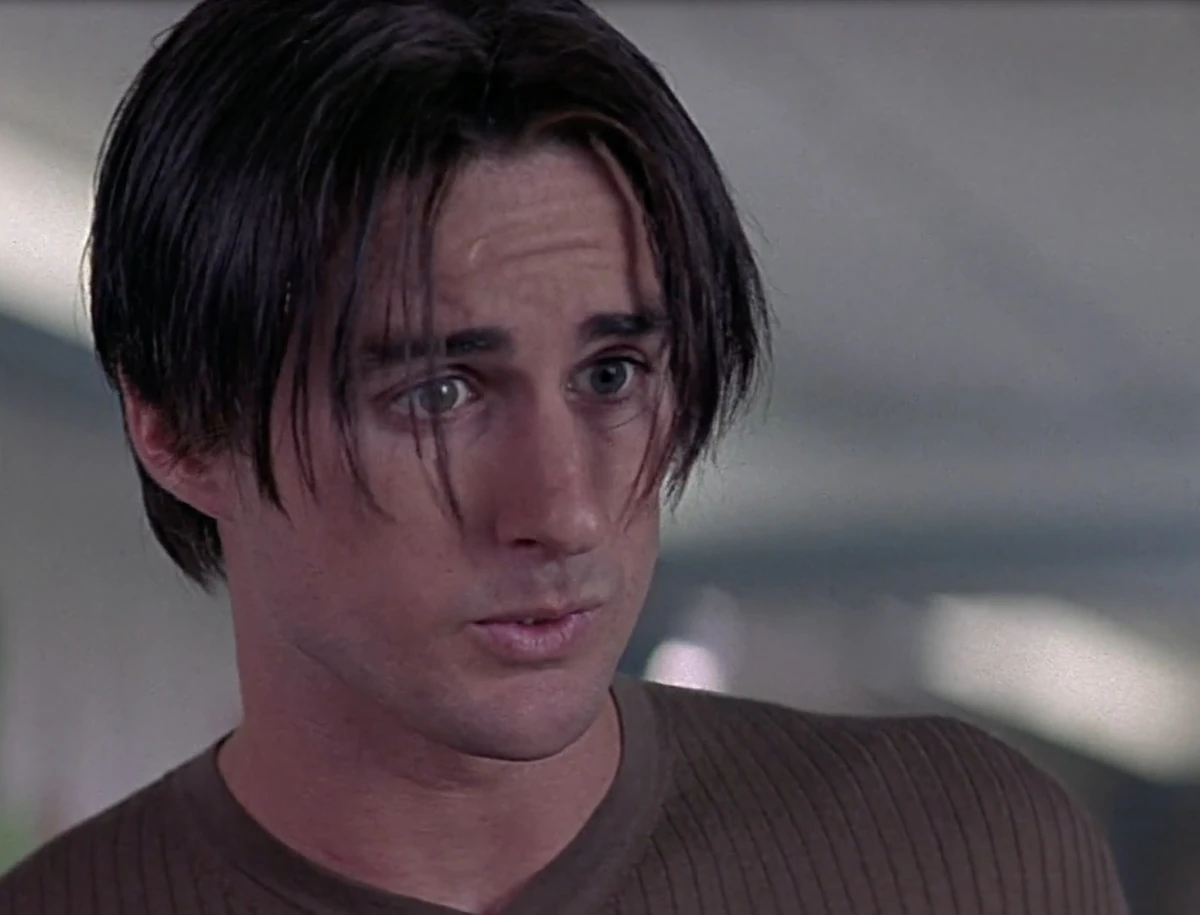
He’s been dead for thirty years. A bullet to the head in a suburban kitchen usually ends a story, right? Not in Woodsboro. Honestly, Scream 6 Billy Loomis might be more influential now than he ever was when he was breathing.
If you walked into the theater expecting a simple slasher, you probably didn't expect a de-aged Skeet Ulrich to be hanging out in the corner of the frame like a dark subconscious shadow. But that’s exactly what we got. Billy isn't just a cameo anymore; he’s the psychological engine driving the new trilogy.
The Ghost in the Machine: How Billy Returns
Let’s get the technical stuff out of the way first. Billy Loomis isn't a ghost. This isn't Friday the 13th or A Nightmare on Elm Street. The Scream franchise has always prided itself on being grounded in a weird, hyper-meta reality.
So, how is he there?
In Scream 6, Billy appears as a visual manifestation of Sam Carpenter’s (Melissa Barrera) trauma and her literal DNA. Sam is Billy’s illegitimate daughter—a secret that blew up her life and sent her spiraling into a world of anti-psychotic meds and "Ghostface" shrines.
It’s All in Her Head
When Sam sees Billy, she’s seeing her own "killer instinct." He shows up in that iconic, blood-stained white t-shirt from the 1996 finale. He’s mocking. He’s encouraging. He’s kinda... proud? It’s a messed-up father-daughter dynamic that gives the New York City setting a much darker undercurrent.
- The Hallucination Factor: Sam is on heavy medication to keep these visions at bay.
- The "Team Loomis" Vibe: Unlike the first time he appeared in the 2022 reboot, by Scream 6, there's a weirdly symbiotic relationship forming.
- The Knife: In a pivotal moment at the theater shrine, Sam finds Billy’s original knife. The hallucination of her father isn't just standing there; he’s basically passing the torch.
Why Scream 6 Billy Loomis Matters for the Plot
The "Core Four" (Sam, Tara, Mindy, and Chad) are trying to outrun a legacy they didn't ask for. But the movie makes a very loud point: you can’t run from your bloodline.
Detective Bailey and his family aren't just random killers; they are obsessed with the "truth" about Sam. They want to frame her as the real murderer, using her connection to Billy as the ultimate "gotcha" for the internet's true crime junkies.
The inclusion of Scream 6 Billy Loomis serves a specific narrative purpose. He represents the temptation of the easy way out. Throughout the film, "Billy" whispers that Sam should just embrace who she is. If people think she's a monster, why not be the most effective monster in the room?
The Mask and the Shrine
One of the coolest (and creepiest) parts of the movie is the Ghostface shrine. It’s a museum of misery. Among the robes and weapons is Billy’s original, cracked, and weathered mask.
When Sam puts on that mask in the finale, it’s a massive "holy crap" moment for fans. She uses her father's persona to take down the people threatening her sister. It’s a subversion of the trope—the killer’s daughter uses the killer’s tools to become a protector.
The Controversy: Ghost or Hallucination?
Look, fans are split on this. Some think the de-aged Skeet Ulrich scenes feel a little too "supernatural" for a series that’s supposed to be about guys with knives.
But if you look closer, Billy never actually provides information Sam doesn't already have. He doesn't "know" things. He reflects her own logic. When he points to a knife, it’s Sam’s brain noticing a tactical advantage and personifying it through the lens of her greatest fear.
It’s a clever way to keep the original antagonist relevant without doing a "he survived the gunshot" retcon. (We’re looking at you, Stu Macher theorists.)
Is Sam Becoming Billy?
This is the big question. By the end of Scream 6, Sam has some serious blood on her hands. She doesn't just kill the bad guys; she shreds them.
The way she wipes the blood off the knife—that little flick of the wrist—is a direct callback to Billy Loomis in 1996. It’s chilling. She’s fighting the urge to enjoy the violence, but the movie leaves it ambiguous.
When she drops the mask on the sidewalk at the very end and walks away with Tara, it’s supposed to be a moment of triumph. She’s leaving Billy behind. But the look in her eyes suggests that the "ghost" of Billy Loomis might just be sleeping, not gone.
Actionable Insights for Scream Fans
If you're trying to piece together the Loomis legacy before the next installment, here are a few things to keep an eye on:
- Watch the Wardrobe: Notice that "Hallucination Billy" always wears the clothes from his death scene. This confirms Sam is picturing him based on crime scene photos or "Stab" movie recreations she’s seen.
- Analyze the Stabbing Style: Compare Sam’s kill scenes to Billy’s. The brutality is identical. The "Loomis Lean" and the knife wipe are the keys to her character arc.
- Track the Medication: Sam’s mental state is tied to her pill intake. When she stops taking them or is under extreme stress, Billy’s presence becomes more vivid and interactive.
The franchise has officially moved past Sidney Prescott, but it clearly isn't ready to let go of the man who started it all. Scream 6 Billy Loomis proves that even in a city of millions, your past is never more than a heartbeat away.
To dive deeper into the lore, your next step is to re-watch the original 1996 Scream and pay close attention to Billy’s monologue about "movies making psychos more creative"—it frames everything Sam does in the sixth film.