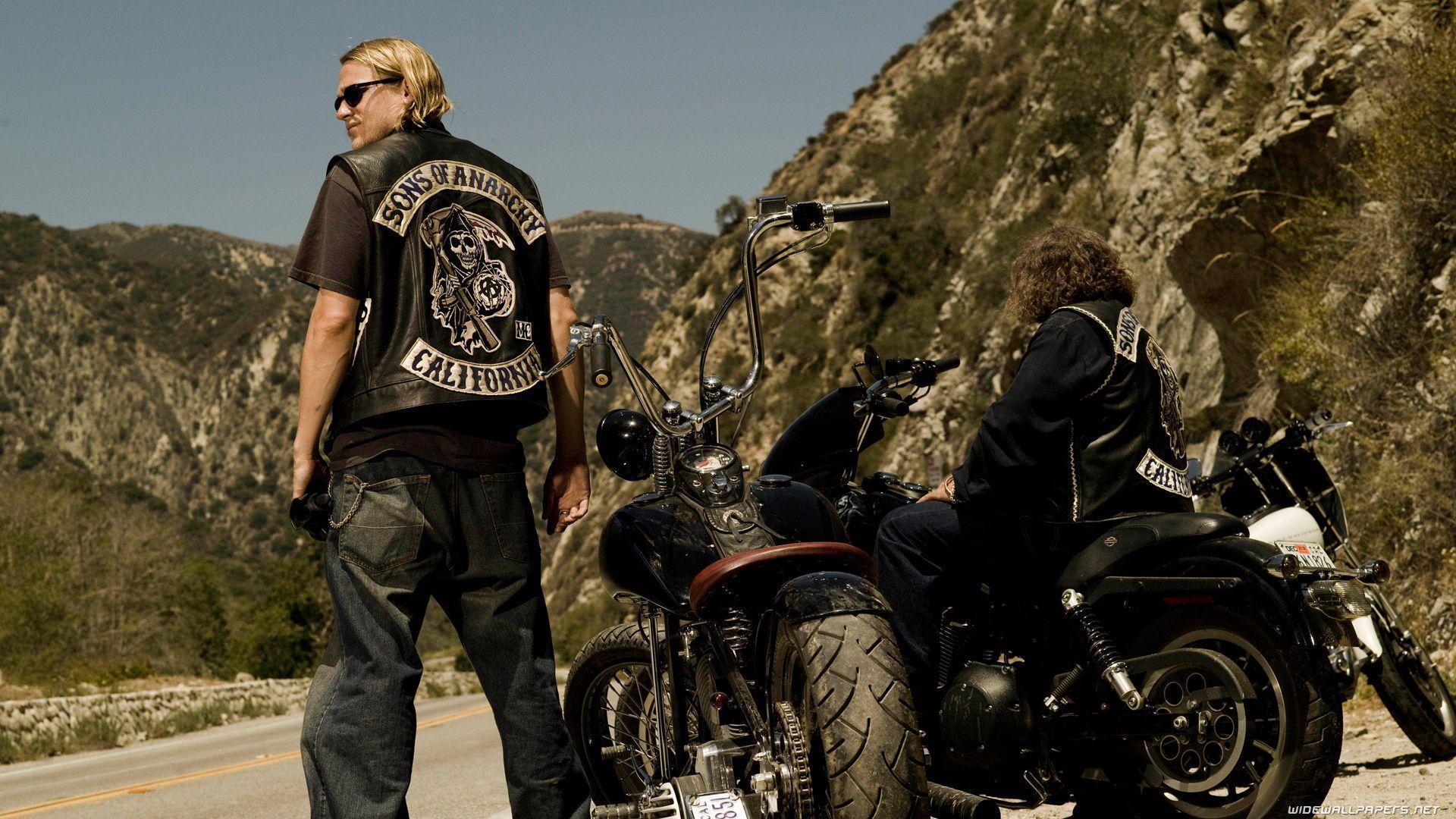
Sons of Anarchy was never a show about "good guys," but by the time we hit the final season, the moral compass didn't just break—it shattered. Enter Ron Tully. When Kurt Sutter announced that shock-rocker Marilyn Manson would be joining the cast for the seventh and final season, the collective internet went into a bit of a tailspin. People weren't just curious about the casting; they were worried. Could a guy known for stage theatrics actually hang with the gritty, grounded realism (well, TV realism) of SAMCRO?
The answer turned out to be a resounding yes, though maybe not in the way fans expected. Tully wasn't just another biker or a generic thug. He was something much more dangerous: a white supremacist shot-caller with enough leverage to make Jax Teller do the unthinkable.
Why Ron Tully Mattered More Than You Think
Honestly, if you look at the landscape of the show in Season 7, Jax was drowning. He was spiraling after Tara’s death, and he needed an ally inside Stockton Research and Development Facility. He needed someone who could handle the "heavy lifting" while the club was dealing with the fallout of the Chinese Triad war and the internal rot of the Marks operation.
Ron Tully was the solution.
He wasn't just a face in the crowd. As the leader of the Aryan Brotherhood (AB) within the prison walls, Tully held the keys to the kingdom. If Jax wanted Juice handled—or if he wanted to maintain any semblance of power while brothers were behind bars—he had to dance with the devil. And let's be real, Tully was a devil who enjoyed poetry and power plays more than simple violence.
The Casting of Marilyn Manson: A Risky Bet
Kurt Sutter has a history of casting musicians. We saw Henry Rollins as AJ Weston in Season 2, and he was terrifying. But Manson? That felt different. Manson, whose real name is Brian Warner, actually took the role because he and his father were huge fans of the show. It wasn't a vanity project. He reportedly wanted to prove he could disappear into a character that was stripped of the makeup and the stage persona.
It worked.
Manson’s Tully was quiet. He was still. He had this unsettling, lizard-like quality where he didn’t need to scream to be the most intimidating person in the room. He spoke in a low, measured tone that made you lean in, which is exactly when he’d usually deliver a threat. You’ve probably seen the scenes where he interacts with Juice Ortiz (Theo Rossi). Those moments are some of the most uncomfortable, gut-wrenching sequences in the entire series. It wasn't just about physical pain; it was about the total psychological dismantling of a character we had watched for seven years.
The Juice Factor: A Relationship Built on Trauma
We have to talk about Juice. Poor, broken Juice. By the time Juice ends up in Stockton, he’s a man without a country. The club has disowned him, and he’s looking for a way out—or a way to end it. Tully becomes his "protector," but in the world of Sons of Anarchy, protection always comes with a price tag that most people can't afford to pay.
Tully’s "ownership" of Juice was a narrative device used to show just how far the club had fallen. To protect the interests of SAMCRO, Jax essentially sold Juice to Tully. It’s one of the darkest moves Jax ever made.
- Tully used Juice as a sexual pawn.
- He used him as a tool to take out Henry Lin.
- He eventually became the instrument of Juice’s death.
The "suicide by Tully" was the only mercy Juice was ever going to get. When Juice tells Tully, "Just let me finish my pie," before getting stabbed to death in the cafeteria, it’s a moment of weird, twisted intimacy. Tully actually seems to respect him in that final second. It’s gross. It’s heartbreaking. It’s classic Sutter.
The Politics of the AB in Stockton
One thing people often get wrong about the Tully storyline is thinking he was just a lone wolf. In the California prison system, the Aryan Brotherhood is a massive, organized machine. By introducing Tully, the show was able to bridge the gap between the street-level drama of Charming and the systemic power of prison gangs.
Jax wasn't just talking to a guy; he was negotiating with a corporation.
The deal was simple: SAMCRO provides the AB with a pipeline for drugs and resources on the outside, and Tully ensures the club's interests are protected on the inside. This is why Tully was able to take out Henry Lin. It wasn't a personal vendetta. It was a business transaction. Tully didn't care about the Triads or the Irish or the MC. He cared about the standing of his "family" and his own ability to exert control from a cell.
Breaking Down the "Manson Performance"
If you go back and rewatch Season 7, pay attention to Manson's eyes. He rarely blinks. It’s a choice that makes him feel predatory. While some critics at the time felt the casting was a bit "stunt-heavy," the reality is that Tully needed to be an outsider. He couldn't feel like "one of the guys." He had to feel like a different species of predator that Jax was forced to coexist with.
Compare Tully to someone like Clay Morrow or even Galen O'Shay. Those guys were motivated by greed or legacy. Tully? Tully seemed motivated by a weird mix of philosophy and pure dominance. He read 19th-century literature and then ordered a hit. That contrast is what made the character stick in people's heads long after the series finale aired.
What Most People Get Wrong About Tully’s Ending
There’s a common misconception that Tully was some kind of "final boss" for the club. He wasn't. In the grand scheme of things, Tully was a survivor. He didn't die in the final bloodbath. While Jax was riding his bike into a semi-truck and the rest of the players were being wiped off the map, Ron Tully was likely sitting in his cell, probably reading a book, still ruling Stockton.
He won.
He got the Triad leader out of the way, he got his hooks into the club's business, and he walked away with zero scratches. In a show where almost everyone gets what’s coming to them, Tully is one of the few who actually improved his position by the time the credits rolled for the last time.
Why the Tully Era Still Matters in TV History
Looking back, the inclusion of Ron Tully marked the moment Sons of Anarchy fully embraced the "tragedy" aspect of its Shakespearean roots. If Jax is Hamlet, then Tully is one of those dark forces in the periphery that reminds the audience that the world is a cold, indifferent place. He represented the grim reality that no matter how much Jax wanted to "clean up" the club, he was always going to be beholden to monsters.
The legacy of the character is tied to the way the show handled the transition of power. Tully was the bridge. He allowed the story to move from the internal struggles of a small-town gang to the high-stakes world of organized crime that eventually swallowed Jax whole.
Actionable Insights for Fans and Rewatchers
If you're planning a rewatch of the final season, keep these things in mind to get a better grasp of the Tully dynamic:
Watch the Power Dynamics
Notice how Jax never stands "above" Tully when they meet in the prison visiting room. The framing usually puts them on equal footing or gives Tully the slight edge in height or positioning. This was a deliberate choice by the directors to show that Jax had lost his "King" status when dealing with the prison system.
Track the Poetry References
Tully isn't just reciting lines to sound smart. His interest in literature and philosophy is a direct contrast to the brutal, animalistic violence he oversees. It’s a "civilized" mask for a barbarian.
Focus on the Silence
The most effective Ron Tully scenes are the ones where he says the least. Notice how he uses silence to make the people around him—especially Juice—uncomfortable. It’s a masterclass in psychological intimidation.
Understand the Trade
Every time Tully does something for Jax, ask yourself what Jax gave up. By the end of the season, you'll realize that Jax basically sold the soul of the club to the AB just to get his revenge on the Triads.
The character of Ron Tully remains one of the most polarizing and fascinating additions to the Sons of Anarchy mythos. Whether you loved the casting of Marilyn Manson or hated it, there is no denying that the final season would have lacked a certain "unhinged" energy without the presence of the Stockton shot-caller. He was the final nail in the coffin of SAMCRO's morality.