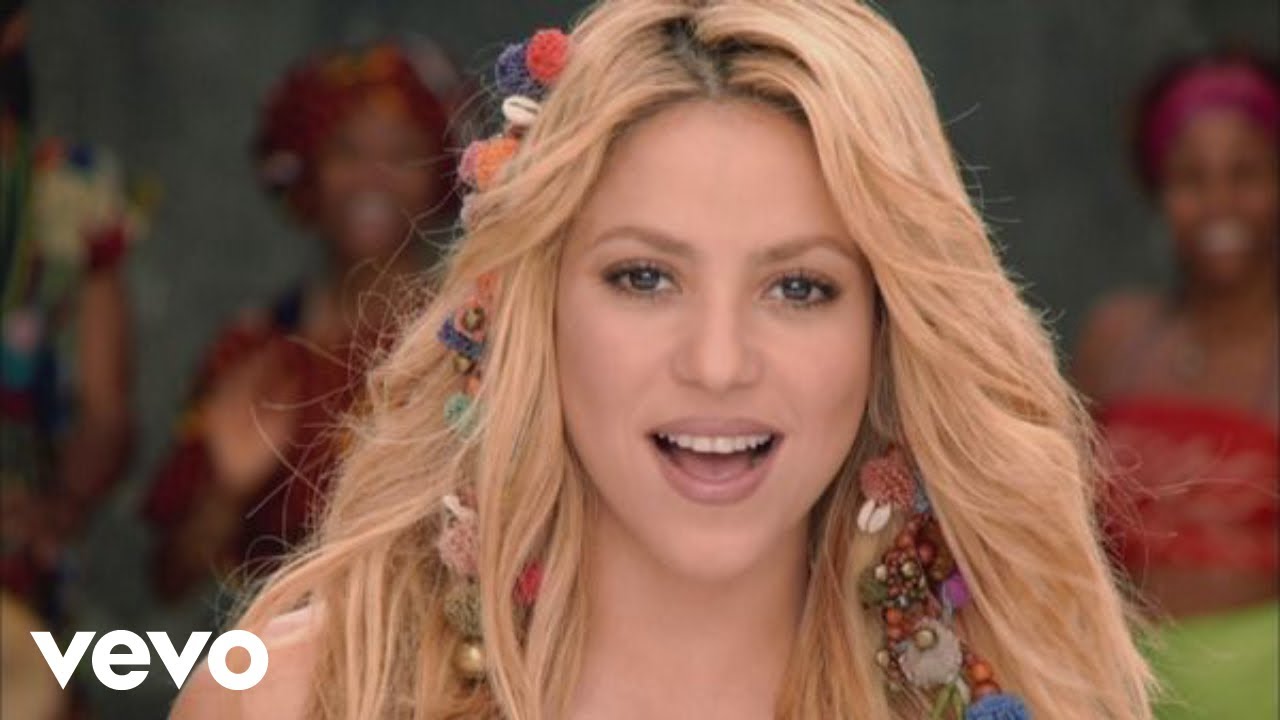
You probably know the chorus by heart. Even if you don't speak a word of Fang, your brain instinctively screams "Tsamina mina, zangalewa" the second that heavy synth bass kicks in. It is arguably the most successful World Cup song ever recorded, but the Waka Waka This Time for Africa lyrics have a history that goes way deeper than a 2010 soccer tournament in South Africa.
Honestly, it’s a bit of a miracle the song even exists. Shakira didn't just sit in a studio and whip up some catchy gibberish. She reached back into the 1980s, borrowed from a Cameroonian military band, and somehow created a track that remains the definitive sound of a continent's pride, even if the copyright drama behind it was messy for a while.
What the Waka Waka This Time for Africa lyrics actually mean
Let's get the big question out of the way. What are they actually saying? The main hook isn't Spanish, and it definitely isn't English. It’s based on "Zangalewa," a 1986 hit by the Cameroonian group Golden Sounds.
The phrase "Tsamina mina" roughly translates to "Come," or "Who called you?" in the Fang language of Central Africa. "Waka Waka" is a bit more figurative—it implies "Do it" or "Burning" in a sense of action and drive. When you put the Waka Waka This Time for Africa lyrics under a microscope, you realize it’s a song about the grind. It’s about being a soldier on the battlefield, or in this case, a player on the pitch.
"You're a good soldier / Choosing your battles / Pick yourself up and dust yourself off / Get back in the saddle."
Shakira starts the track with these lines to set a tone of resilience. It's simple stuff, sure. But in the context of the 2010 World Cup—the first one ever held on African soil—those words carried a massive weight of expectation. People weren't just watching a game; they were watching a historical shift.
The controversy you probably forgot
Not everyone was thrilled when the song dropped. There was a lot of noise back in 2010 about why a Colombian singer was the face of an African World Cup. Local South African artists felt snubbed. Then there was the issue of the Golden Sounds melody.
For a minute, it looked like a classic case of a Western superstar "sampling" African culture without giving credit. However, Shakira and Sony eventually acknowledged the influence. The members of Golden Sounds were ultimately compensated, and the song moved from a potential legal nightmare to a genuine celebration of cross-continental collaboration. It’s a weirdly human story of mistake and correction.
Breaking down the verses
The song moves fast. You've got these short, punchy lines that mimic the heartbeat of a runner.
"The pressure's on / You feel it / But you got it all / Believe it."
It’s classic sports psychology. If you’ve ever played a high-stakes match, you know that moment where your lungs burn and you want to quit. That’s what the Waka Waka This Time for Africa lyrics are tapping into. It’s not just "yay, soccer!" It’s about the internal struggle of performance.
Interestingly, the inclusion of the South African group Freshlyground gave the track the local texture it desperately needed. Zolani Mahola’s vocals provide a counterpoint to Shakira’s rock-inflected rasp, grounding the song in the actual geography it claims to represent.
Why the Fang language matters here
Using the Fang language wasn't just a stylistic choice. It was a bridge. By repurposing a song that was already a hit across Africa in the 80s, Shakira tapped into a collective memory. In Cameroon, "Zangalewa" was a marching song. It was used by soldiers and scouts. By the time it reached the world stage in 2010, it already had a DNA of discipline and movement.
"Tsamina mina zangalewa / Anawa a a / Django he he / Django he he / Tsamina mina zangalewa / This time for Africa."
The "Django" part? It’s often interpreted as a call to keep going or a reference to who is in charge. It’s rhythmic. It’s percussive. It’s designed to make a stadium of 90,000 people stomp their feet in unison.
The impact of the 2010 World Cup on the song's legacy
We have to talk about the vuvuzelas. If you watched the 2010 World Cup, you remember that constant, hive-like buzzing sound in every broadcast. The Waka Waka This Time for Africa lyrics had to compete with that noise. The song is mixed in a way that is incredibly bright and loud, specifically so it could cut through the atmosphere of a chaotic stadium.
It worked.
The song didn't just peak in 2010. It stayed. It has billions of views on YouTube. Why? Because it’s one of the few "event" songs that doesn't feel dated the second the event ends. Compare it to the 2014 or 2018 anthems. Do you remember those? Most people don't. Shakira captured lightning in a bottle because she stayed true to the folk roots of the source material while wrapping it in high-gloss pop production.
A shift in perspective
There’s a nuance in the "This time for Africa" line that often gets overlooked. For decades, the global narrative around Africa was often one of pity or "aid." This song shifted the vibe to one of dominance and celebration. "This time for Africa" wasn't a request; it was a statement of arrival.
The lyrics encourage the listener to look at the "front line." It’s about visibility.
"Listen to your God / This is our motto / Your time to shine / Don't wait in line."
It’s almost a manifesto for the underdog. Whether you're an athlete or just someone trying to get through a rough Tuesday, that message resonates.
Practical takeaways for fans and creators
If you’re looking at the Waka Waka This Time for Africa lyrics from a creative or analytical standpoint, there are a few things to keep in mind.
First, the power of the "nonsense" syllable. Not that Fang is nonsense, but to a global English or Spanish audience, it functions as a phonetic hook. You don't need to know the translation to feel the energy. This is a huge lesson for songwriters: sound often beats literal meaning in a global market.
Second, respect the source. If Shakira hadn't eventually credited Golden Sounds, this song would be remembered as a piece of cultural theft. Instead, it’s a tribute.
If you want to truly appreciate the track, do these three things:
- Listen to the original "Zangalewa" by Golden Sounds. You’ll hear the raw, military-band energy that Shakira polished up. It gives the pop version so much more context.
- Watch the 2010 music video again. Look at the cameos from players like Gerard Piqué (who Shakira famously met during this shoot), Dani Alves, and Carlos Kameni. It’s a time capsule of a specific era in football history.
- Read the full translation of the Fang verses. Understanding that it’s a "call and response" between a leader and their troops makes the stadium-chant feel way more authentic.
The song remains a staple at weddings, sporting events, and gym playlists for a reason. It captures a universal human truth: sometimes, you just have to pick yourself up and keep going because this is your moment. It’s not just a song about a ball; it’s a song about the human spirit.
To get the most out of the track today, try playing it on a high-quality sound system where you can actually hear the percussion layers. Most people only hear the melody, but the "African-ness" of the song lives in the polyrhythmic drumming tucked under the synth. That’s where the real soul of the song hides.