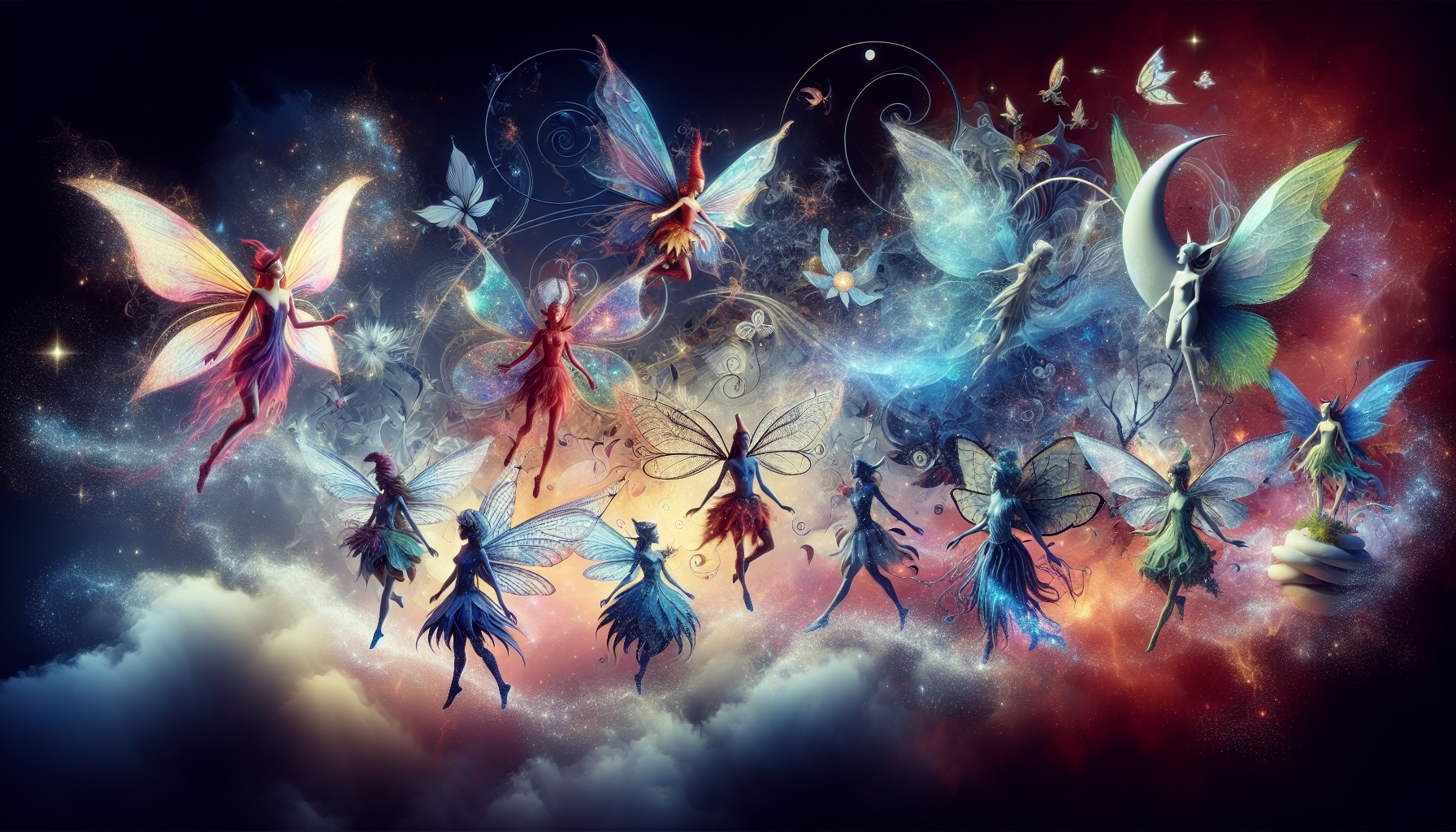
If you’ve ever stayed up past midnight trying to slide a crisp five-dollar bill under a sleeping kid's pillow without waking them, you’ve probably wondered what you’re actually supposed to be representing. We all have that generic image in our heads. A tiny lady with sparkly wings, maybe a wand, definitely some glitter. But if we’re being real, the question of what do tooth fairies look like in real life doesn't have a single answer because the "real" tooth fairy is a shapeshifter of history, culture, and localized folklore.
She wasn't always a "she." She wasn't even always a fairy.
In fact, for most of human history, the creature coming for your teeth looked a lot more like a rodent than a Disney character.
The Mouse That Started It All
Before the modern winged sprite took over the Western imagination, the answer to what tooth fairies looked like was simple: they were mice. Specifically, La Petite Souris in France or Ratoncito Pérez in Spanish-speaking countries.
Why a mouse? It’s basically biological envy.
Mice are polyphyodonts—well, not exactly, but their incisors never stop growing. If a human child loses a tooth, parents in the Middle Ages and through the Renaissance believed that by offering the tooth to a mouse, the child’s permanent tooth would grow in just as strong, sharp, and everlasting as a rodent’s.
If you saw a tooth fairy in real life in 18th-century Madrid, you wouldn't see wings. You’d see a dapper little mouse, sometimes depicted in a suit, who sneaks into bedrooms to swap teeth for coins or candies. Luis Coloma, a Jesuit priest, actually solidified this image in the late 1800s when he wrote a story about Ratoncito Pérez for the young King Alfonso XIII.
Even today, if you ask a child in Mexico or Argentina what the tooth fairy looks like, they aren't picturing a miniature person. They’re picturing a mouse with a satchel.
The Evolution of the Winged Sprite
So, when did the wings show up? The "tooth fairy" as we know her is actually a very recent American invention.
The first printed reference to the specific term "Tooth Fairy" didn't appear until around 1908 in a Chicago Daily Tribune "Household Hints" column. Before that, she basically didn't exist in the English-speaking world. The look we associate with her today—the flowing dress, the ethereal glow—is a mashup of the Blue Fairy from Pinocchio and the general "Good Fairy" tropes from 19th-century Victorian literature.
Professional folklorists like the late Rosemary Wells, who was arguably the world’s leading expert on tooth fairy lore (and even operated a Tooth Fairy Museum in Illinois), noted that the fairy's appearance is incredibly fluid. Because there is no "official" book like the Bible or a single defining movie like Miracle on 34th Street for Santa, the tooth fairy is a blank slate.
Wells conducted surveys for years and found that people’s mental images varied wildly:
- 74% saw the fairy as female.
- 8% saw the fairy as male.
- 12% saw the fairy as an animal (mostly that lingering mouse influence).
What the "Real" Fairy Looks Like Across Borders
If you travel, the visual changes.
In some Northern European traditions, there’s the tandfe. While "fe" means fairy, the historical roots are more grounded in the idea of a "tooth fee." In Viking culture, children's teeth were considered lucky. Warriors would wear them on necklaces into battle. So, in that context, the "tooth fairy" looked like a grizzled Norse warrior with a string of molars around his neck.
Kinda different from Tinkerbell, right?
In parts of South Asia, there is no fairy. The "look" of the ritual is the sun. Children throw their teeth onto the roof or toward the sun, asking for a "gold tooth" in return. The "real life" entity here is celestial and formless.
The Physicality of the Modern Fairy
When people ask what do tooth fairies look like in real life, they’re often looking for a physical description to tell their kids.
According to modern pop culture and the "official" letters parents often download, the consensus has settled on a few specific traits. She is usually described as being about three to four inches tall. This is practical—she has to fit under a pillow without being felt.
Her clothing is often described as iridescent. This isn't just for style. Folklore suggests fairies use materials from nature, so think dragonfly wing silk or gossamer spun from morning dew.
But there’s a darker side to the "real" look.
In some older, more obscure European tales, fairies were not benevolent. They were "Hidden People." They looked like small, wrinkled humans—earthbound and a bit gritty. They didn't want the teeth to be nice; they wanted them because they held a piece of the human soul. If you’re going for historical "realism" based on ancient Celtic lore, the tooth fairy looks less like a ballerina and more like a tiny, focused scavenger.
Why the Look Matters
The reason the tooth fairy’s appearance is so debated is that it serves as a psychological bridge. Losing a body part—which is what a tooth is—is actually pretty traumatic for a six-year-old.
The "look" of the fairy is designed to distract from the blood and the gap in the gums.
By making the fairy look like a miniature, sparkling doctor-meets-celebrity, we turn a biological loss into a financial gain. The appearance of the fairy is essentially the first lesson children get in "branding."
How to "Spot" the Tooth Fairy
Since she’s notoriously shy (and fast), catching a glimpse is basically impossible. However, there are "real life" clues that people point to.
Some families use "fairy dust" (biodegradable glitter) on the windowsill. Others look for "footprints" left in flour or sugar on the nightstand. These physical manifestations are as close as we get to a visual confirmation in the real world.
Honestly, the tooth fairy looks like whatever a child needs her to look like to feel safe. If that’s a mouse in a tuxedo, great. If it’s a glowing orb of light, that works too.
Actionable Steps for Documenting the Fairy
If you are trying to "prove" what the tooth fairy looks like to a skeptical child or just want to lean into the tradition, here is how you can solidify her appearance in your household:
- Choose a Tradition: Decide if your household follows the Winged Sprite or the Tooth Mouse. This keeps the "visual evidence" consistent.
- Create a "Sighting" Log: Use a small notebook where the child can draw what they think they saw in a dream. This reinforces the personal version of the fairy.
- Use "Physical Evidence": If you want to simulate a real-life encounter, use tiny "artifacts." A miniature letter written in microscopic handwriting (you can use a fine-liner pen and a magnifying glass) suggests a fairy with very small, dexterous hands.
- The Receipt Method: Leave a "Tooth Receipt." Describe the quality of the tooth (Grade A, Shiny, Well-Brushed). This gives the fairy a professional, almost "clerical" persona, which is a fun modern twist on the look.
The tooth fairy remains one of the only mythological figures without a fixed "face." She is a mirror of our cultural values—moving from the gritty utility of a rodent to the shimmering magic of a winged spirit. Whatever she looks like to you, she’s been a part of the human experience for centuries, one molar at a time.