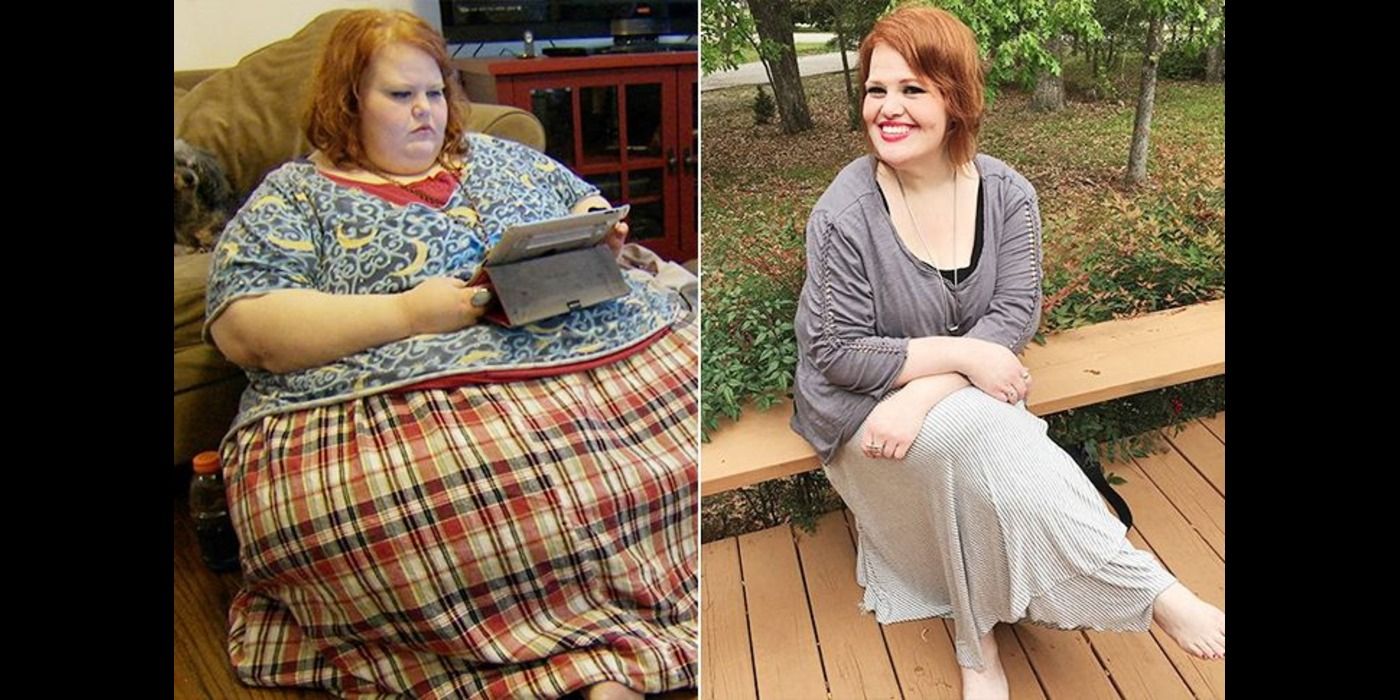
Pauline Potter didn't just walk onto the screen of My 600-lb Life; she carried a legacy that most viewers didn't even realize was there. When she first appeared in Season 3, she wasn't just another patient seeking Dr. Nowzaradan’s help in Houston. She was already famous. Or maybe "infamous" is the better word for it. Back in 2011, Guinness World Records officially named her the World's Heaviest Living Woman. She weighed 643 pounds at that time, though by the time she filmed her debut episode, that number had climbed even higher.
It’s easy to judge. People do it all the time when they watch reality TV, especially shows documenting extreme weight loss. But Pauline’s story is a messy, complicated look at what happens when food isn't just fuel, but a literal addiction that consumes every facet of a human existence.
The Struggles of Pauline Potter: More Than Just a Number
When we first met her, Pauline was at a breaking point. She weighed 678 pounds. Think about that for a second. That is the weight of a small car.
Her life was stationary. She relied almost entirely on her son, Dillon, who became her primary caregiver. This is a common theme on the show, right? The enabler-patient dynamic. It’s a toxic loop. Dillon loved his mother, so he fed her. He fed her because she was hungry, and because it was the only way to keep the peace. But in doing so, he was effectively helping her eat herself to death. Honestly, watching their dynamic was one of the most heartbreaking parts of the early episodes.
Dr. Younan Nowzaradan—the legendary "Dr. Now"—doesn't mince words. He saw Pauline as one of his most "difficult" patients. Why? Because she was incredibly resistant to the process.
The Denial Phase
Most patients have a "wake-up call" moment. Pauline’s took years. During her first year in the program, she actually gained weight. She struggled with the 1,200-calorie, high-protein, low-carb diet. She made excuses. She argued with the staff. She even claimed that she was "doing her best" while the scale showed the literal opposite.
It’s a psychological wall. When you’ve spent decades using food to cope with emotional trauma or physical pain, the idea of giving it up feels like losing a limb. For Pauline, food was her best friend and her worst enemy.
The Turning Point and Gastric Bypass
Eventually, something clicked. Or maybe the fear of dying finally outweighed the desire for a burger. Pauline did eventually qualify for gastric bypass surgery, but the road was anything but smooth. After the surgery, she faced a massive setback: a perforated ulcer.
This wasn't just a minor complication. It was life-threatening. She was hospitalized, and for a while, it looked like she might become another tragic statistic of the show. She was in incredible pain, and the recovery was grueling. But strangely, this brush with death seemed to be the catalyst she actually needed.
Life After the Cameras: The Transformation
If you only watched her first episode, you’d probably think she never made it. But the "Where Are They Now?" follow-ups tell a completely different story. Pauline Potter is one of the show's biggest success stories, even if she started as one of its most frustrating participants.
She moved to Texas to be closer to Dr. Now’s clinic. She started taking the physical therapy seriously. By her last update, she had lost over 400 pounds. She dropped from nearly 700 pounds down to the 200s. That is an astronomical feat.
Dealing With Excess Skin
Losing 400 pounds creates a new problem: skin.
Imagine a balloon that’s been inflated to its limit for years and then suddenly deflated. The skin doesn't just "snap back." Pauline dealt with massive amounts of hanging skin that caused infections and made movement difficult. She eventually underwent skin removal surgery, which is often more painful and invasive than the weight loss surgery itself.
But she did it. She kept going.
Why Pauline’s Journey Matters in 2026
We talk a lot about "body positivity" and "health at every size" these days. Pauline’s story sits at a weird intersection of those conversations. She was once proud of her record-breaking weight, but she eventually realized that "pride" was killing her.
Her journey highlights a few things that often get lost in the editing of reality TV:
- Obesity is often a symptom of underlying trauma. Pauline didn't get to 700 pounds because she liked the taste of cake. She got there because of a deep-seated emotional need that was never addressed.
- Surgery is not a "magic pill." The surgery only works if the patient changes their brain. Pauline had the surgery and still struggled for years afterward.
- The Role of the Enabler. Dillon’s journey was just as important as hers. He had to learn to say "no" to his mother, which is an incredibly difficult thing for a child to do, regardless of their age.
The Reality of Fame After the Show
Pauline has been relatively quiet on social media lately, which is often a good sign for former reality stars. It usually means they are living their lives instead of chasing the high of digital validation. She’s had her ups and downs—weight fluctuations are normal for someone who has struggled with morbid obesity—but she has largely maintained her health.
People often ask: Is she still alive?
Yes. As of the latest verifiable reports, Pauline is still doing well. She is mobile, she is active, and she is no longer the woman who was "trapped" in her own bed.
Key Takeaways from the Pauline Potter Story
If you’re looking at Pauline’s story as inspiration or just out of curiosity, there are some very real lessons to be learned here.
- Consistency over perfection. Pauline failed a lot. She gained weight, she cheated on her diet, and she fought with her doctor. But she didn't quit. In the long run, her "not quitting" was more important than her "failing."
- Accountability is painful. Having Dr. Nowzaradan tell you the truth to your face is brutal. But without that blunt accountability, Pauline would likely not be here today.
- The environment matters. Moving to Houston was a game-changer for her. Sometimes, you have to physically remove yourself from the environment that made you sick in order to get well.
- Medical complications are real. Gastric bypass is major surgery. The ulcers and infections Pauline faced are common risks that people often overlook when they think surgery is the "easy way out."
Actionable Steps for Weight Management
While most people aren't starting at 700 pounds, the principles Pauline eventually adopted are universal. If you're struggling with weight or looking to support someone who is, consider these steps.
Address the Psychology First
Don't just start a diet. Talk to a therapist who specializes in eating disorders or addiction. If you don't fix the "why" behind the eating, the "what" you eat won't matter for very long.
Build a Support System That Isn't Enabler-Based
You need people who will tell you "no." If your friends or family are bringing junk food into the house when they know you're trying to change, you need to have a very serious, possibly uncomfortable conversation with them.
Track Everything (Honestly)
The scale doesn't lie, but we do. Pauline's biggest hurdle was lying to herself about how much she was eating. Use a tracking app or a simple notebook. Be honest about every bite.
Focus on Protein and Fiber
Dr. Now’s 1,200-calorie diet is famous for a reason. High protein keeps you full; fiber keeps your system moving. Cutting out the "white" carbs (sugar, flour, pasta) is usually the quickest way to see results and reduce inflammation.
Pauline Potter's story is a testament to the fact that it is never too late. You can be the "World's Heaviest Woman" and still find a way back to a functional, healthy life. It isn't easy, it isn't pretty, and it definitely isn't fast. But it's possible.