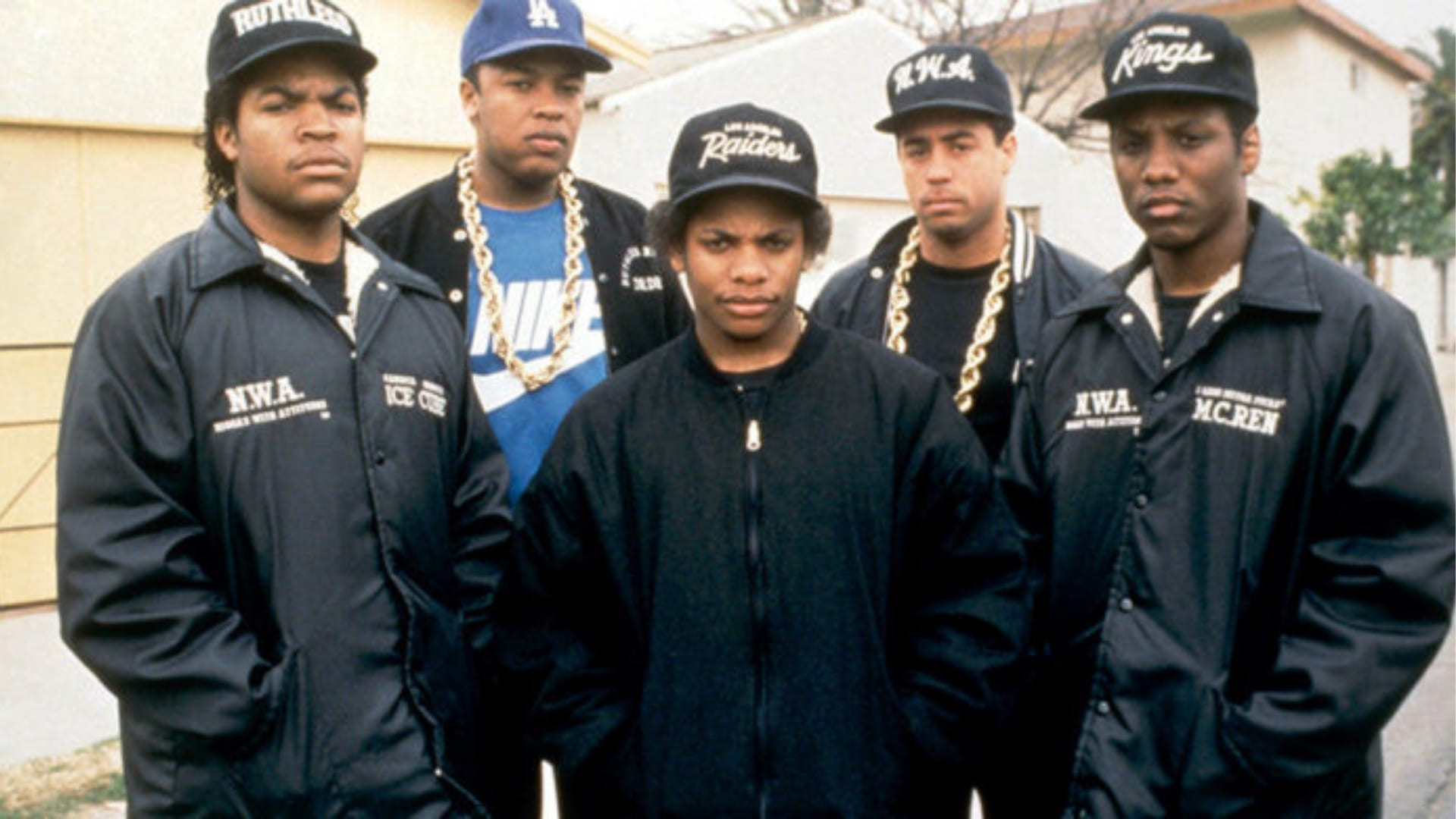
They weren't just a band. They were an explosion. When people talk about the members of NWA, they usually think of Dr. Dre's headphones or Ice Cube's movies, but back in 1987, these guys were the most hated men in America. The FBI literally sent them a warning letter. Think about that for a second. A government intelligence agency was worried about five guys from Compton with some microphones and a drum machine.
Niggaz Wit Attitudes (N.W.A) didn't just change hip-hop; they broke the door down so everyone else could walk through. But the lineup wasn't always what you think it was. It was a volatile mix of street hustlers, classically trained DJs, and teenage poets who happened to be at the right place at the exactly right, most chaotic time.
The Five-Man Roster That Shook the World
Most fans point to the Straight Outta Compton era as the definitive lineup. You had Eazy-E, Dr. Dre, Ice Cube, MC Ren, and DJ Yella. That’s the "core five." But history is messy. Before the fame, Arabian Prince was a founding member, often forgotten in the highlight reels despite being all over the early electro-hop tracks.
Eazy-E: The Visionary Hustler
Eric Wright was the catalyst. No Eric, no N.W.A. Period. He wasn't even a rapper at first. He was a drug dealer who wanted a legitimate way out, so he used his street money to fund Ruthless Records. People forget how high-pitched and "non-rap" his voice sounded initially. Dr. Dre and Ice Cube basically had to coach him into becoming a frontman. But Eazy had the charisma. He had that smirk. He understood branding before "branding" was a corporate buzzword. He was the "Godfather of Gangsta Rap," not because he was the best lyricist, but because he had the balls to say things no one else would.
Dr. Dre: The Architect
Andre Young was already a local celebrity with the World Class Wreckin' Cru. He wore sequins. He did electro-funk. But when he teamed up with Eazy, he pivoted to something darker and heavier. Dre is the reason those albums still sound good today. While other 80s rap sounds "thin" or dated, Dre’s production on Straight Outta Compton has a bottom end that still rattles car windows. He was the perfectionist. If the snare didn't hit right, the session didn't move forward. He was the glue holding the musicality together while everyone else provided the chaos.
Ice Cube: The Pen
O'Shea Jackson was just a kid from South Central who happened to be a lyrical genius. He wasn't from Compton, which is a detail people often miss, but he wrote the vast majority of the lyrics for Eazy and the group. Cube brought the anger. He brought the political edge. While Eazy wanted to talk about street life for the shock value, Cube wanted to explain why the streets were like that. When he left in 1989 over a royalty dispute (he famously only got about $32,000 while the group's album made millions), the soul of the group's messaging arguably went with him.
The Soldiers in the Shadows: MC Ren and DJ Yella
It's honestly a bit disrespectful how often MC Ren gets sidelined in the "greatest of all time" conversations. Lorenzo Patterson joined a bit later than the others but became the group's most reliable technical rapper. When Cube left, Ren took over the heavy lifting. He was the "Villain." His flow was smoother and more aggressive than almost anyone else in the late 80s.
Then there’s DJ Yella (Antoine Carraby). He and Dre came from the World Class Wreckin' Cru together. Yella was the quiet one, the guy behind the boards helping Dre build the wall of sound. He stayed loyal to Eazy-E until the very end, even being the only member of N.W.A to attend Eazy’s funeral in 1995. That tells you everything you need to know about the internal dynamics of the group. It wasn't just a business; it was a brotherhood that went through a very public, very ugly divorce.
Why the Lineup Fell Apart
Money. It’s always money. Jerry Heller, the group's manager, is a polarizing figure in this story. Cube felt Heller was driving a wedge between Eazy and the rest of the group. You’ve probably seen the movies, but the reality was even more tense. There were lawsuits, diss tracks like "No Vaseline"—which is arguably the most brutal takedown in music history—and actual physical threats.
By the time the members of NWA officially called it quits, they were all millionaires (or soon to be), but they were also enemies.
- 1989: Ice Cube leaves after realizing he’s getting cheated on publishing.
- 1991: Dr. Dre leaves to form Death Row Records with Suge Knight, leading to a nasty feud with Eazy.
- 1995: Eazy-E passes away from AIDS-related complications, just as the group was starting to talk about a reunion.
It’s one of the great "what ifs" of music. If Eazy hadn't gotten sick, would we have seen a mid-90s N.W.A album produced by a peak-era Dr. Dre? We’ll never know.
The Missing Piece: Arabian Prince
You can't talk about the members of NWA without mentioning Kim Nazel, aka Arabian Prince. He's the guy on the far left of the Panic Zone cover. He left right as the group was hitting the stratosphere because he saw the writing on the wall regarding the finances. He was more into the electronic, Prince-inspired sound of early West Coast rap. As the group shifted toward "Reality Rap," he didn't quite fit the image anymore. He’s still active today, mostly in the tech and gaming space, and he’s remarkably chill about being "the guy who left N.W.A."
Cultural Impact and 2026 Relevance
Why do we still care about these guys in 2026? Because they were the first to turn the camera toward the parts of America that the evening news ignored. They didn't care about being role models. They cared about being mirrors. When you listen to "Fuck tha Police" today, it doesn't sound like a relic from the past; it sounds like a conversation that is still happening in every major city in the world.
The members of NWA proved that you could be authentic, terrifying, and wildly successful all at the same time. They invented the blueprint for the modern independent artist. They showed that you don't need a major label's permission to speak your truth—you just need a way to distribute it.
How to Explore the N.W.A Legacy Today
If you want to understand the group beyond the biopic, you have to look at the solo discographies. The DNA of N.W.A is scattered across thirty years of music.
- Listen to "The Documentary" by The Game: It was executive produced by Dre and features the spirit of the N.W.A sound reborn in the 2000s.
- Watch the "Defiant Ones" Documentary: This gives a much more technical, less "Hollywood" look at how Dre and Jimmy Iovine built their empire post-N.W.A.
- Read "Parental Discretion Is Advised" by Gerrick Kennedy: This is the most factual, non-biased account of the group's rise and fall. It doesn't sugarcoat the sexism or the violence that the group often courted.
- Track the "Deep Cover" Single: This was Dre's first move after N.W.A, introducing Snoop Dogg and proving he didn't need the group to define the West Coast sound.
The story of N.W.A is a reminder that greatness is often temporary, but influence is permanent. They were five guys who shouldn't have worked together on paper, but for a few years in a garage in Compton, they were the most important voices in the world. They didn't just make music; they made a movement that redefined global culture.
Next Steps for the Die-Hard Fan:
To truly understand the sonic evolution of the group, go back and listen to N.W.A. and the Posse (1987) followed immediately by Efil4zaggin (1991). The jump in production quality and lyrical complexity over just four years is one of the most staggering progressions in any musical genre. Pay close attention to MC Ren's verses on the latter—it's a masterclass in breath control and internal rhyme schemes that often gets overshadowed by the Dre-Eazy drama.