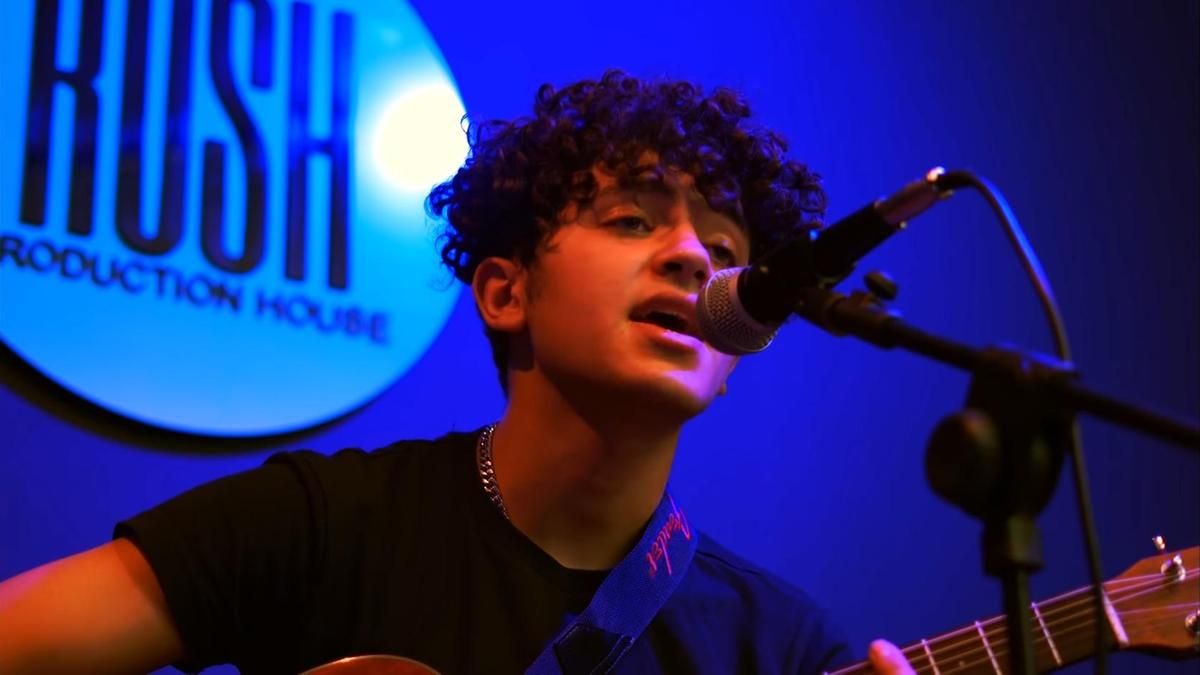
You’ve probably heard it. That infectious, upbeat "Lalalala" melody that feels like a warm hug from a Mediterranean summer. It dominated TikTok. It took over Spotify’s Global Viral 50. It’s "Hadal Ahbek" by Issam Alnajjar. But if you don't speak Arabic, you’ve likely been humming along to a language you don’t understand, which is exactly why hadal ahbek lyrics english became one of the most searched musical queries over the last few years.
It’s a vibe. Honestly, it’s more than a vibe—it’s a cultural bridge.
The song, which translates roughly to "I’ll Keep Loving You," wasn't just a flash in the pan. It was a 17-year-old from Amman, Jordan, recording a song in his bedroom and accidentally shifting the global perspective on Arabic pop music. Most people come for the catchy hook but stay because they want to know if the words are as sweet as the melody. They are.
The Viral Spark: How a Jordanian Teenager Broke the Internet
Issam Alnajjar didn't have a massive marketing budget. He had a guitar and a hook. When he first posted a snippet of the track, the internet did what it does best: it took a local sound and made it universal. The song is rooted in the "Levantine" dialect, which is common in Jordan, Palestine, Lebanon, and Syria.
Why does that matter?
Because the phrasing in this dialect is incredibly rhythmic. When Issam sings the chorus, the words "Hadal ahbek" roll off the tongue in a way that fits perfectly into Western pop structures. It doesn't feel "foreign" to a listener in New York or London; it feels like a song they’ve known their whole life but in a different font.
The initial explosion happened on TikTok, where creators used the track for everything from travel vlogs to "get ready with me" videos. But as the song traveled, the language barrier became a point of curiosity. People weren't just content with the "Lalala" anymore. They wanted the soul behind the sound. They needed the hadal ahbek lyrics english translation to verify that the song was as romantic as it sounded.
Breaking Down the Meaning: Hadal Ahbek Lyrics English Translated
Let’s get into the nitty-gritty of what he’s actually saying.
The title itself, "Hadal Ahbek," is a promise. "Hadal" implies a continuation, a persistence. "Ahbek" is "I love you." So, "I will keep loving you" or "I’ll remain loving you." It’s simple. It’s pure. It lacks the cynical edge that a lot of modern Western pop often carries.
The opening lines set a scene that feels almost cinematic:
Rahet u nasetni... (She left and forgot me...)
W ana msh a'ref asawi... (And I don't know what to do...)
Wait. This is where the translation gets interesting. While the melody is bright, the lyrics actually lean into that classic "yearning" trope that Arabic music does better than almost any other genre. It’s about a love that feels permanent even when the person is out of reach.
When you look at the hadal ahbek lyrics english version, you see phrases like "You are the light of my eyes." In Arabic, this is "Nour el ein," a legendary idiom used by everyone from Amr Diab to local wedding singers. It’s not just a cliché; it’s a deep cultural expression of someone being essential to your vision of the world.
Issam sings about how he doesn't want anyone else. He talks about how the days feel empty without this specific person. The bridge of the song is particularly poignant when translated, as it emphasizes that no matter how much time passes, the "staying power" of his affection remains unchanged. It’s a "ride or die" sentiment packaged in a bubblegum pop aesthetic.
Why the English Translation Hits Differently
Translating Arabic to English is notoriously difficult. Why? Because Arabic is a language of "intensifiers."
One word in Arabic might take an entire sentence in English to explain the emotional weight. For example, when Issam uses terms of endearment, they often translate to something like "my life" or "my heart." In English, saying "You are my heart" sounds a bit dramatic for a pop song. In Arabic, it's just Tuesday.
The hadal ahbek lyrics english search results often give you a literal translation, but they miss the "Tarab"—the emotional ecstasy or grief inherent in the music.
- Literal: I will stay loving you.
- Poetic: My love for you is a constant state of being that time cannot erode.
Most fans prefer the latter, even if they can only pronounce the former. This nuance is why the song stayed relevant. It wasn't just a "TikTok song." It was a gateway drug to Middle Eastern pop.
The Global Remix and the Loud Luxury Effect
Success breeds collaboration. Once "Hadal Ahbek" cleared hundreds of millions of streams, the industry came knocking. We saw a "US Remix" featuring Ali Gatie and Marshmello, which helped bridge the gap even further.
Ali Gatie, being Iraqi-Canadian, was the perfect bridge. He added English verses that mirrored the sentiment of the original Arabic lyrics, effectively creating a "built-in" translation for Western audiences. This version shifted the vibe slightly toward a more polished, EDM-inflected sound, but the heart—the "Hadal Ahbek" hook—remained in Arabic.
This was a massive win for representation. Usually, for a song to go "global," artists are pressured to translate the whole thing into English. Issam didn't do that. He kept the core identity of the song intact. This forced the audience to meet him halfway, leading to the massive spike in people looking for hadal ahbek lyrics english online. They wanted to understand his world, rather than him conforming entirely to theirs.
How to Properly Use the Lyrics in Your Own Life
If you’re planning on using these lyrics for an Instagram caption or a message to someone special, context is everything.
Don't just copy-paste a Google Translate version. It’ll look clunky. Instead, focus on the core themes. The song is about steadfastness. It’s about telling someone, "Hey, the world is chaotic, and things change, but my feelings for you are the one thing that’s anchored."
Actually, the best way to appreciate the lyrics is to listen to the acoustic version. Without the heavy percussion and the "Lalala" distractions, you can hear the strain and the sincerity in Issam’s voice. You realize that "Hadal Ahbek" isn't just a happy song; it's a defiant one. It’s a refusal to let go.
Common Misconceptions About the Song
People often think it's a folk song. It’s not. It’s 100% modern pop, even if it uses some traditional melodic scales.
Another mistake? Thinking the song is about a current girlfriend. Issam has mentioned in various interviews that the song was inspired by a general feeling and the universal experience of young love, rather than a specific diary entry. It's meant to be a blank canvas that anyone can paint their own heartbreak or romance onto.
Also, some people get the "Lalala" part confused with other viral hits. No, it’s not the same as the "Lalala" song by Y2K and Bbno$. It’s a completely different vibe. One is a basement party in Vancouver; the other is a sunset over the Dead Sea.
Actionable Steps for Music Lovers
If you've fallen in love with "Hadal Ahbek," don't stop there. The world of Arabic indie-pop is exploding right now.
1. Check out the "A7LA" Spotify Playlist. This is where the newest sounds from the MENA (Middle East and North Africa) region live. You’ll find artists like Wegz, Elyanna, and Saint Levant who are doing similar things—mixing Arabic with English and French.
2. Follow the lyricists. Look up the credits on Genius. Often, these songs are collaborations between young poets and producers who are redefining what Arabic literature sounds like in the 21st century.
3. Learn the "Hadal Ahbek" phonetically. If you really want to impress your friends or your partner, learn to sing the chorus in the original Arabic. The phonetics are: Ha-dal ah-bek, ha-dal ah-bek. It’s two words. You can do it.
4. Compare the remixes. Listen to the original version, then the Marshmello remix, then the acoustic version. Notice how the meaning of the lyrics seems to shift depending on the production. The acoustic version feels like a secret; the remix feels like a celebration.
The phenomenon of hadal ahbek lyrics english proves that language is rarely a barrier to a good story. We all want to be told that someone will keep loving us. We all want to feel like, despite the distance or the time, someone is staying put. Issam Alnajjar just happened to say it in a way that made the whole world want to sing along.
So, next time you hear that "Lalalala," remember it’s not just filler. It’s the sound of a 17-year-old kid from Jordan telling the world that some feelings don't have an expiration date.
To dive deeper into the world of global pop, start by following the artists who are featured on the "Hadal Ahbek" remixes. Exploring the discography of Ali Gatie or the discography of Elyanna will give you a much broader sense of how Arabic music is currently being woven into the fabric of global Top 40 radio. You can also use language-learning apps like Duolingo or Mondly specifically for the Levantine dialect if you want to understand the slang and nuances that "Hadal Ahbek" uses so effectively.