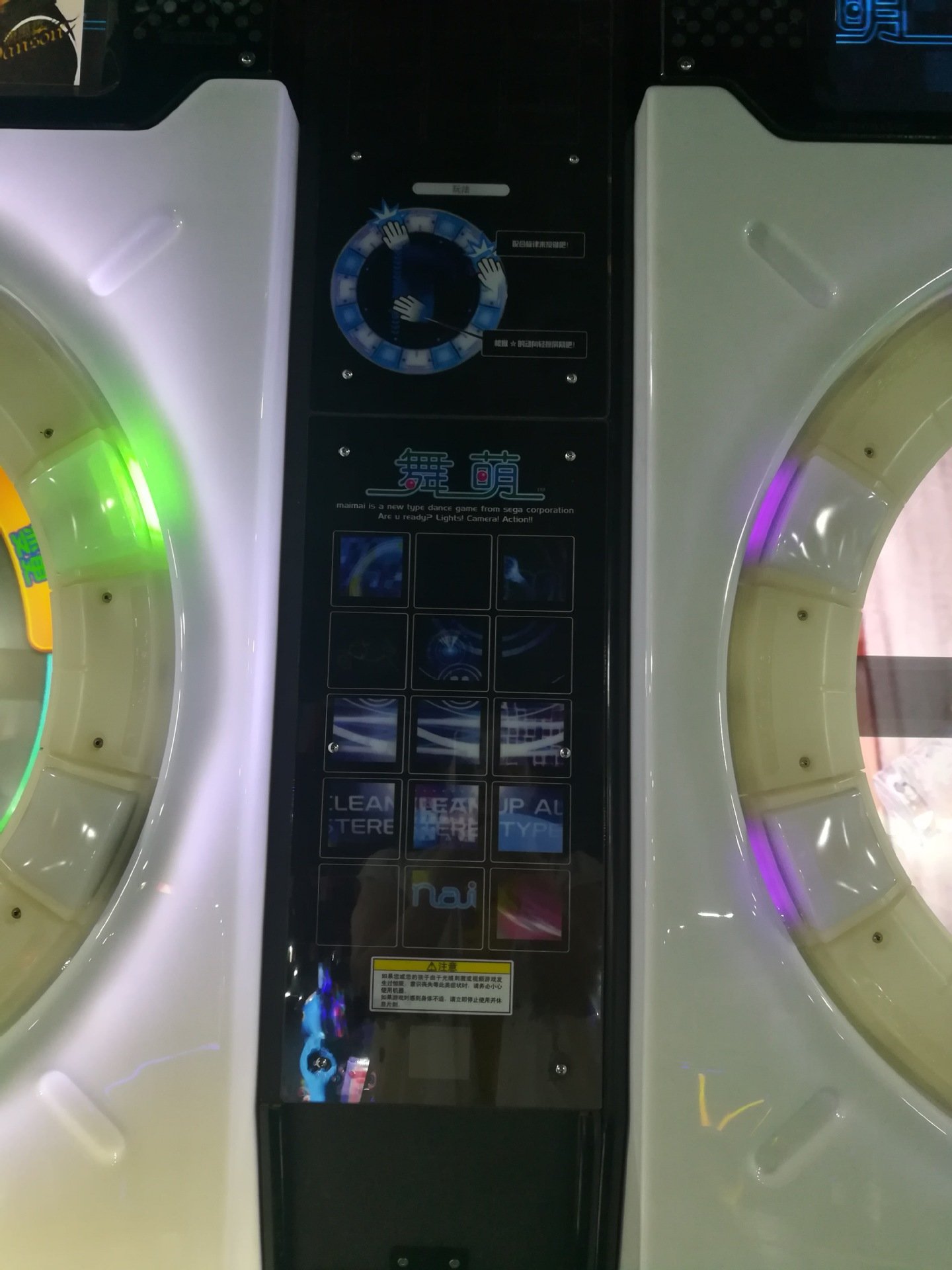
You’re walking through a loud, neon-drenched arcade in Akihabara or maybe a Round1 in a suburban US mall, and you see it. It looks like a giant, glowing washing machine. People are standing in front of it, wearing white cotton gloves, moving their arms in patterns so fast it looks like they’re trying to summon a glitch in the Matrix. This is maimai, Sega’s circular rhythm game that has somehow managed to outlast dozens of flashier competitors since it first hit the floor in 2012.
Honestly, the first time you see a high-level maimai player, it’s intimidating. They aren't just playing a game; they’re performing. The "washing machine" nickname isn't just a joke—the physical layout of the machine consists of a large circular touchscreen surrounded by physical buttons on the outer rim. It’s weird. It’s tactile. And it’s arguably the most addictive thing Sega has built in the last two decades.
The Maimai Arcade Game: More Than Just a Meme
The core of the experience is built around a circular interface. Notes fly from the center of the screen toward the outer edge. You’ve got two ways to hit them: tapping the physical buttons on the rim or touching the screen itself.
It sounds simple. It isn't.
What makes maimai unique is the "slide" mechanic. You'll see a blue star icon appear; you tap it, wait a beat for the path to light up, and then sweep your hand across the screen in a specific shape. This is why everyone wears gloves. If you try to slide your bare hand across that glass at high speeds, the friction will literally give you rug burn. Or skin burn. Either way, it’s not fun. The gloves allow for that smooth, frictionless glide that defines the flow of the game.
The Evolution from Green to Finale to DX
Sega didn’t just release one version and call it a day. The game has gone through massive iterations. The older versions—like maimai PLUS, GreeN, ORANGE, and MiLK—built the foundation. But the real shift happened with the transition from the "Classic" cabinets to the maimai DX (Deluxe) cabinets.
Wait, why does that matter?
The DX machines changed the hardware. They made the screen more responsive and adjusted the internal camera systems. However, for a lot of purists, the maimai Finale era (the last version of the old hardware) remains the peak of the "classic" feel. If you find a machine today, it’s almost certainly running a version of maimai DX Universe or Festival. These newer versions have better networking and easier card-login systems using Sega’s Aime or Bandai Namco’s Banapassport.
Why the Gloves Actually Matter (And What to Buy)
If you see someone playing maimai without gloves, they are either a beginner or they have hands made of Teflon. Professional players—the ones hitting 101% Perfect scores on Level 14+ tracks—usually buy cheap cotton work gloves from Daiso or hardware stores.
Why cotton? It breathes. It slides. Synthetic materials can sometimes melt or snag if you're hitting a particularly aggressive slide pattern in a song like "Pandora’s Box."
- Standard Cotton: Cheap, disposable, perfect.
- Microfiber: Too much grip, usually a bad idea.
- Touchscreen-compatible gloves: Often unnecessary because the maimai screen is infrared-based or highly sensitive, but they can help on certain newer DX screens.
The Secret Language of Maimai Charts
You can't just talk about the game without talking about the "notes." Most rhythm games use falling blocks. Maimai uses a language of shapes.
There are "Taps" (pink circles), "Dual Taps" (yellow), and "Hold" notes where you have to keep your finger on the button. But the slides are where the complexity lives. You'll see U-turns, zig-zags, and full circles. On higher difficulties, the game expects you to use both hands independently—one hand tapping a rhythm on the buttons while the other performs a slow, sweeping slide across the center.
It’s a workout. No, really.
Playing three rounds of maimai on Expert or Master difficulty is genuine cardio. Your heart rate will spike. You’ll sweat. It’s one of the few arcade games that is as much a physical sport as it is a video game. This is probably why the community is so tight-knit; you’re all essentially "suffering" through the same high-speed physical choreography.
The Music: Why You’ll Recognize the Playlist
Sega has a massive advantage in the rhythm game space: their library.
Maimai features a huge amount of Vocaloid music (Hatsune Miku is everywhere here), J-Pop, and anime openings. If you’ve watched a popular series in the last five years, the theme song is probably in the cabinet. But the real "boss" tracks come from Sega’s in-house composers. Artists like t+pazolite, Sasakure.UK, and Cranky produce high-BPM (beats per minute) tracks specifically designed to push the limits of human reaction time.
The Rating System is Savage
In maimai, a "100%" isn't the best you can do. You’re aiming for the "All Perfect Plus" (AP+), which usually sits around 101%. The game tracks your accuracy down to the millisecond.
The "Rating" number on your profile is the ultimate status symbol. It’s a cumulative score based on your top performances across different song versions. If you see someone with a rating over 15,000, move aside. They’ve spent hundreds of hours—and likely hundreds of dollars—refining their muscle memory.
Finding a Machine Near You
This is the tricky part. If you’re in Japan, Taiwan, or South Korea, maimai machines are as common as vending machines. You’ll find them in every Sega (now GiGO) center.
In the West, it’s a different story.
Because of licensing issues with the music and the cost of the cabinets, Sega doesn’t officially distribute the "international" version of maimai in the US as widely as they do in Asia. However, Round1 Entertainment is the hero here. Most Round1 locations in the US have maimai cabinets. They usually run the "International" version, which might be a few updates behind the Japanese version but still features the core gameplay and most of the bangers.
If you aren't near a Round1, you're looking at independent arcades that import "grey market" cabinets. These are hit-or-miss because they often can't connect to the official servers, meaning you can't save your progress or unlock new songs.
Common Misconceptions and Pitfalls
People think the screen is the only way to play. It’s not.
In fact, at a high level, the physical buttons are much more reliable for "Taps." The screen is mostly for slides and "Touch" notes (a feature added in the DX era). If you try to play only using the screen, you’ll find that your hands often block your view of the upcoming notes. Using the buttons keeps your periphery clear.
Another mistake? Ignoring the "Ring."
The outer ring of buttons is actually divided into eight segments. Learning exactly where one ends and the next begins—without looking—is the first major hurdle for any "Expert" level player. It’s all about tactile landmarks.
How to Get Good (The Actionable Part)
If you’re serious about moving past the "Basic" and "Advanced" levels, you need a plan.
- Buy the gloves. Seriously. Don't be that person with the squeaky hands.
- Focus on "S" Ranks. Don't just try to survive a song. In maimai, the "S" rank (97% or higher) is the gateway to unlocking Master difficulty. If you can't get an S on Expert, you aren't ready for Master.
- Watch Hand-View (Te-mory) Videos. Go to YouTube and search for "maimai [song name] 手元." These are top-down videos of experts playing. Watch their hand positioning. Notice how they swap hands during complex slides to avoid getting tangled.
- Mirror the Screen. If you’re struggling with a specific pattern, some players find success by literally standing in front of a video and practicing the motions on a wall or table. It sounds crazy. It works.
Maimai is a culture. It’s a community of people who don't mind looking a little ridiculous in public for the sake of a perfect score. It's loud, it's fast, and it’s one of the few remaining reasons to actually go to a physical arcade in an era of home consoles.
Next Steps for the Aspiring Player:
Check the Ziv's Arcade Locations map to find the nearest maimai DX or Finale cabinet in your city. Once you find one, grab a pair of white cotton gloves—the kind used for coin collecting or light labor—and start with Level 7 or 8 songs to get a feel for the slide timing. Don't worry about the crowd; everyone is too busy watching the screen to judge your form. Focus on the ring, keep your hands moving, and aim for that first 97% "S" rank to unlock the real game.