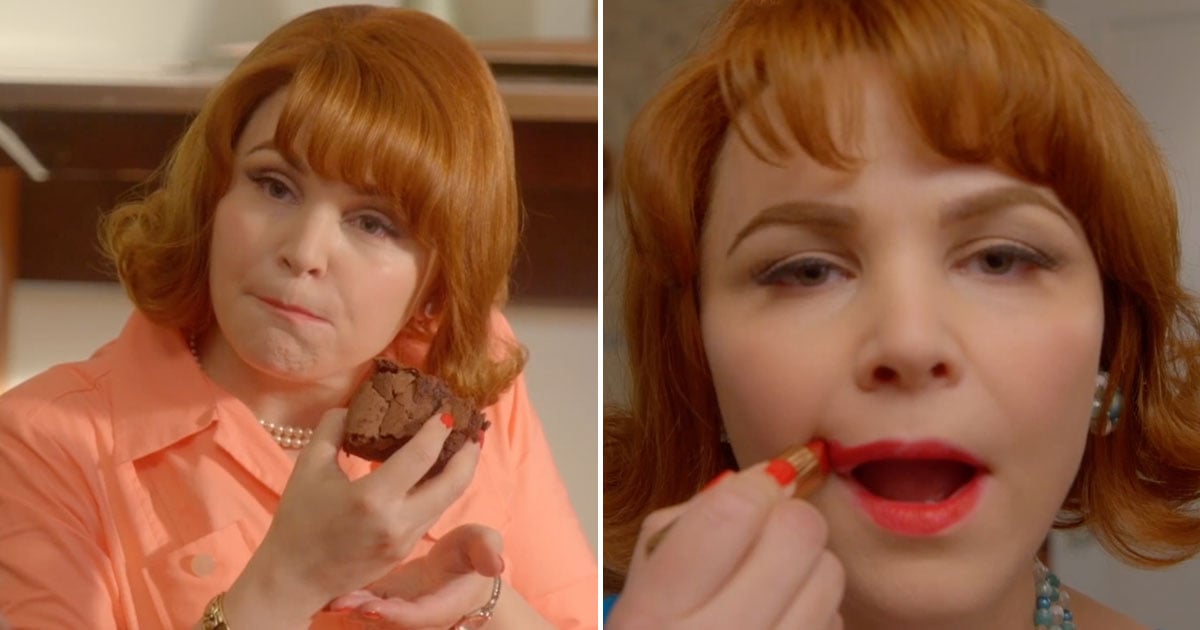
Ginnifer Goodwin basically reinvented the "perfect housewife" trope in a way that ruined us for every other period drama. When we talk about Why Women Kill Beth Ann, we aren’t just talking about a fictional character from Marc Cherry’s 1960s-set dark comedy; we’re dissecting the anatomy of a breaking point. It’s 1963. The house is spotless. The pot roast is in the oven. The husband, Rob Stanton, is a piece of work.
People still search for this show years after it aired because Beth Ann Stanton’s journey isn’t just about a murder. It’s about a woman realizing her entire identity was built on a lie. She wasn’t just a wife; she was an unpaid employee in a firm that didn't value her. Honestly, watching her transformation from a submissive, tapping-on-the-juice-glass wife into a calculated architect of revenge is one of the most satisfying arcs in modern television.
The Tragic Catalyst No One Forgets
Everything in Beth Ann’s life revolves around the death of her daughter. It’s the ghost in the room. For years, she carried the crushing weight of guilt, believing she left the gate open. She thought she was responsible for the greatest tragedy a parent can endure. This guilt is what made her so compliant to Rob. She felt she owed him her soul because she "failed" him as a mother.
Then the truth hits.
It wasn't her. It was Rob. He was having an affair back then, too. He was the one who left the gate open while rushing to meet his mistress. He let his wife drown in self-loathing for years just to keep his own life comfortable. That is the moment Why Women Kill Beth Ann becomes a story about justice rather than just spite. When she finds out that he didn't just cheat, but that he presided over the destruction of her psyche to cover his own tracks, the "perfect" housewife dies. The woman who replaces her is terrifyingly smart.
Why We Root for a "Killer"
It’s kinda weird, right? We’re watching a woman plot a homicide and we’re cheering. But the show handles the 1963 timeline with such a specific blend of bright, saturated colors and dark, rotting secrets that you can't help but side with her. Beth Ann is a master of "kill them with kindness," literally.
She doesn't just grab a knife. She befriends the mistress, April. That’s a move most people would never have the stomach for. But Beth Ann sees in April a younger version of herself—someone who still has a chance at a life that isn't dictated by a man like Rob. The complexity of their friendship is the heart of the season. Beth Ann starts out wanting to break them up, but she ends up wanting to save April from the same fate she suffered.
The Brilliant Mechanics of the Finale
The ending of Beth Ann's story is a Rube Goldberg machine of poetic justice. She doesn't pull the trigger herself. She doesn't have to. By manipulating the domestic violence situation happening next door with Mary Vlasin and her abusive husband, Ralph, Beth Ann creates a scenario where the monsters take each other out.
It's genius.
- She swaps the bullets in Ralph’s gun.
- She makes sure Rob is in the line of fire.
- She plays the part of the grieving widow perfectly.
She didn't just want Rob dead; she wanted him to be the architect of his own demise, just as he had been the architect of her misery. The way she stands on that staircase, watching the chaos she orchestrated with a blank, serene face? Chills. Every single time.
The 1960s Trap: Not Just a Costume Choice
The setting matters. In 1963, Beth Ann had no credit card in her own name. She had no career. If she left Rob, she had nothing. This is the nuance that many viewers miss when they ask why she didn't "just leave." Leaving wasn't an option for a woman of her social standing and resources at that time. She was trapped in a gilded cage, and the only way out was to burn the cage down with the owner still inside.
Marc Cherry, who also gave us Desperate Housewives, knows how to weaponize suburbia. The pastel dresses and the floral wallpaper act as a camouflage. Beth Ann uses the very tools of her oppression—her domesticity, her "invisible" status as a housewife—to commit the perfect crime. Nobody suspects the woman who spends four hours a day making a gelatin salad.
What Most People Get Wrong About the Ending
There’s a common misconception that Beth Ann stayed in the house forever. If you watch the final montage that bridges the three timelines (1963, 1984, and 2019), you see her pass the keys to Simone Grove (Lucy Liu). She didn't stay stuck in the past. She got her revenge, she took the insurance money, and she presumably lived a life where she never had to tap a glass for a refill again.
She also took care of April and the baby. That’s the most "human" part of her story. She became the mother she wasn't allowed to be, but on her own terms, in a chosen family. It’s a radical ending for a character who started the series asking permission to speak.
How to Apply the "Beth Ann" Lessons to Your Own Media Literacy
When you're analyzing characters like Beth Ann Stanton, look past the shock value of the "kill." The narrative value lies in the "why" and the "how."
- Analyze the Power Dynamic: Look at what the character stands to lose. Beth Ann’s stakes weren't just her marriage; they were her sanity and her survival.
- Notice the Color Palette: In Why Women Kill, Beth Ann’s world is the most colorful, which ironically highlights how much she is overcompensating for her internal grey world.
- Study the Supporting Cast: April isn't just a plot device; she’s a mirror. Understanding how Beth Ann treats her "rival" tells you everything you need to know about her true character.
To truly appreciate the writing of this character, re-watch the scene in the diner where she first talks to April. Notice how her eyes change when she realizes the girl isn't a villain, but another victim. That’s the moment the murder becomes inevitable. The next logical step for any fan is to compare Beth Ann’s calculated approach to Simone’s more passionate, impulsive reaction in the 80s timeline—it reveals how different eras of "the feminine mystique" handled the same betrayal. Check the specific parallels in how they both handle their husbands' secrets; it’s a masterclass in thematic writing.