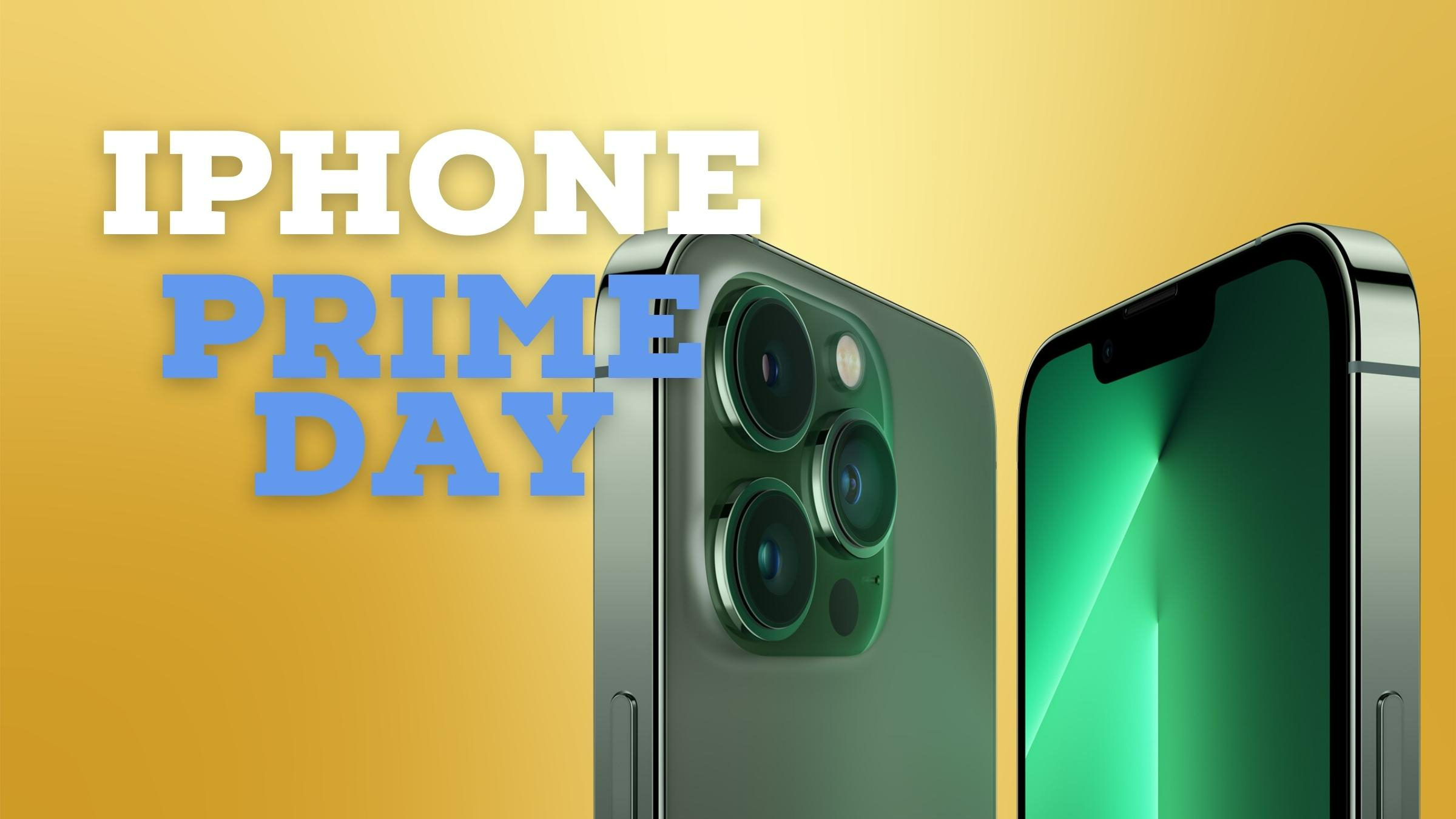
You’re staring at a screen, weighing your options, and wondering if a phone released years ago is actually a smart move or just a recipe for immediate regret. It’s a valid concern. Technology moves fast—stupid fast. But the decision to buy iPhone 13 Pro Max today isn't about being nostalgic or cheap; it’s about a very specific turning point in Apple's engineering history that many people actually overlook.
Most tech reviewers are obsessed with the "newest and shiny." They’ll tell you that if you aren't holding the latest titanium frame with a 48-megapixel sensor, you're basically living in the stone age. They're wrong. Honestly, the 13 Pro Max was the last "tank" Apple built before they started getting really weird with Dynamic Islands and Always-On displays that—let’s be real—drain your battery faster than a 4K export.
The Battery King That Refuses to Retire
If you ask any long-term power user what they miss most about older hardware, it’s the endurance. When Apple launched the 13 Pro Max, they hit a sweet spot. They paired the A15 Bionic chip with a massive 4,352 mAh battery.
It was a beast. Still is.
Even in 2026, a refurbished or well-maintained 13 Pro Max often outlasts newer "base" models. Why? Because the efficiency of the A15 was a massive leap over the A14, and the later chips focused more on peak performance bursts rather than sustained, day-long sipping of power. You've probably seen those battery drain tests on YouTube where the 13 Pro Max holds its own against the 14 and 15 series. It’s not a fluke. It’s physics.
The weight is the trade-off, though. This thing is heavy. It’s basically a glass and stainless steel brick in your pocket, and if you have small hands, you’re going to feel it by noon. But for people who travel or work outdoors and can’t be tethered to a MagSafe puck every four hours, that weight is a fair price to pay for security.
Why the ProMotion Display Still Feels Premium
Let’s talk about the screen. This was the first iPhone to get ProMotion—that sweet 120Hz refresh rate. If you’re coming from a standard iPhone 12 or even a newer non-Pro model, the difference is jarring. Everything is just... smooth. Scrolling through Twitter (or X, whatever we're calling it this week) feels like butter.
The Notch vs. The Island
Some people hate the notch. I get it. It’s a little "2021." But here’s a hot take: the notch is actually less intrusive when you're watching movies. The Dynamic Island on newer phones sits lower on the screen, literally cutting into 16:9 content more than the notch does. When you buy iPhone 13 Pro Max, you’re getting a massive 6.7-inch Super Retina XDR display that is uninterrupted for the most part.
The peak brightness is 1,200 nits for HDR content. Sure, the newer models can hit 2,000 nits in direct sunlight, but unless you’re trying to use your phone in the middle of the Sahara at high noon, you won’t notice. For 99% of us, 1,200 nits is plenty to see who’s texting you while you're sitting at a cafe.
Cameras: Are 12 Megapixels Enough for 2026?
This is where the marketing teams usually get you. They scream about "48 Megapixels!" and "Photonic Engines!" like it’s magic. But look at the actual glass.
The 13 Pro Max uses three 12MP sensors. The main sensor has huge pixels ($1.9 \mu m$), which means it sucks in light like a vacuum. In photography, light is everything. Megapixel count is mostly for cropping. If you aren't printing billboard-sized posters of your lunch, 12MP is more than enough.
- Macro Mode: It was the first to do it well. You can get 2cm away from a flower or a circuit board and get detail that looks professional.
- ProRes Video: It’s a storage hog, but the quality is insane. It's the reason why indie filmmakers still carry these as B-cams.
- Cinematic Mode: It’s at 1080p on this model, which is a bummer compared to the 4K on newer ones, but it still looks great for social media clips.
Basically, if you’re a creator, you aren't losing much. The colors are natural, and the "Night Mode" is still industry-leading. Apple's computational photography handles the heavy lifting, making sure your skin doesn't look like plastic even in weird lighting.
The A15 Bionic: Overqualified and Underestimated
We’ve reached a point in smartphone history where the hardware has outpaced the software. What are you actually doing on your phone? Instagram? Email? Some Genshin Impact?
The A15 Bionic, with its 5-core GPU, is still a monster. It handles iOS 17 and iOS 18 without breaking a sweat. In fact, the A15 is so good that Apple used it in the iPhone 14 (non-pro) and the iPad Mini. That tells you everything you need to know about its longevity.
Thermal management on the 13 Pro Max is also surprisingly good. Because the chassis is so large, it dissipates heat better than the smaller "Pro" models. You won’t see the same aggressive dimming of the screen during a long gaming session that you might see on an iPhone 13 Pro or 14 Pro.
Market Reality: The Cost-to-Value Ratio
Let’s be real—money matters. You can usually find a used or refurbished 13 Pro Max for a fraction of the price of a new Pro Max.
But you have to be careful where you buy.
Avoid "too good to be true" deals on marketplaces where the seller has zero ratings. Look for reputable refurbishers like Back Market, Gazelle, or even Apple’s own Certified Refurbished store if they have stock. Apple replaces the battery and the outer shell, so it’s basically a new phone.
If you're buying from a private seller, check the battery health. Anything above 87% is solid for a phone this age. If it's below 80%, factor in the cost of a battery replacement at an Apple Store (usually around $99). Even with that extra cost, you're still coming out way ahead compared to the $1,100+ you'd drop on the latest model.
Things That Might Annoy You
It’s not all sunshine. There are a few things that might make you hesitate.
First, the Lightning port. It’s dying. The world is moving to USB-C, and if you want to carry just one cable for your Mac, iPad, and phone, the 13 Pro Max will be the "odd one out." It’s a minor annoyance, but it’s there.
Second, the lack of "Action Button." You still have the classic mute switch. Personally, I prefer the switch because I can feel it in my pocket to make sure my phone is silent, but some people love the programmability of the new button.
Third, no satellite SOS. If you’re a hardcore hiker who goes deep into the wilderness where there’s no cell service, the 14 and 15 series offer a safety net that the 13 Pro Max simply doesn't have. If you stay within city limits, this literally doesn't matter.
The Verdict on Whether to Buy iPhone 13 Pro Max
Is it a "dated" phone? Only on paper. In your hand, it feels like a premium, heavy-duty tool. The screen is gorgeous, the battery is legendary, and the performance is still in the top tier of all mobile devices currently in use globally.
If you want the best "bang for your buck" in the Apple ecosystem right now, this is it. You're getting 90% of the flagship experience for about 50-60% of the price. That’s just smart math.
Actionable Steps for Buyers
- Check the Model Number: If you’re buying used, go to Settings > General > About. If the model number starts with "M," it’s a retail unit. If it starts with "F," it’s refurbished. If it starts with "N," it’s a replacement unit from Apple.
- Verify the Screen: Use a flashlight to check for deep scratches or "burn-in" on the OLED display. ProMotion should feel smooth; if it feels choppy, the screen might have been replaced with a cheap third-party part.
- Test the Cameras: Open the camera app and switch between all three lenses (.5x, 1x, 3x). Listen for any clicking sounds—that’s a sign the optical image stabilization (OIS) is failing.
- Buy a Good Case: Since it’s a heavy phone, drops are more impactful. A case with a raised lip for that massive camera bump is non-negotiable.
- Check Carrier Compatibility: Ensure the phone is "Unlocked" so you aren't stuck with a specific provider's expensive plan.
By following these steps, you can secure a device that will easily last you another 3 to 4 years of heavy use without feeling like you're lagging behind the curve.